
Planning a trip to the UK, watching British TV, or chatting with a British friend? Then you’ll need more than textbook English. Here at FunkyEnglish we love British slang, and this is our guide to the words and expressions Brits actually use.
On this page you’ll find 50 common British slang words and expressions, each with its meaning and an example sentence. We start with our Top 10 favourites, then list the rest by topic: people, feelings, food and money, everyday things, arguments, and the things Brits say and do. Every expression links to its own lesson with a picture, more examples and a quiz.
Want all 50 in one place?
Get our free PDF guide: every word and expression with its meaning and an example, our top 10 favourites with pictures, and a quick quiz. Pop your email in below and we’ll send it straight over.
Our Top 10 Favourite British Slang Words
Which one do you like best?
Ten – Bloke
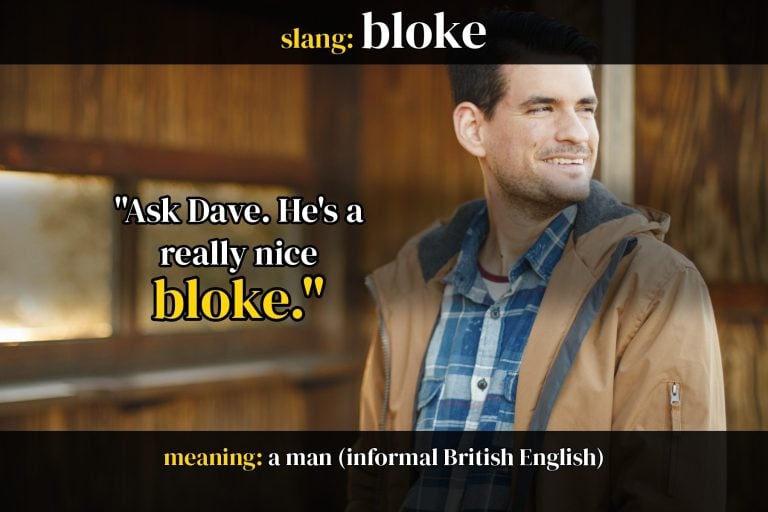
We start with one of the most useful words in British English. A bloke is simply a man. If you like someone, he’s a great bloke. If he’s a bit strange, he’s a funny bloke. You’ll hear it in Australia too.
“If you visit London, give Tony a call. He’s a really nice bloke and he’ll be happy to show you around!”
Full lesson: Bloke
Nine – Skint
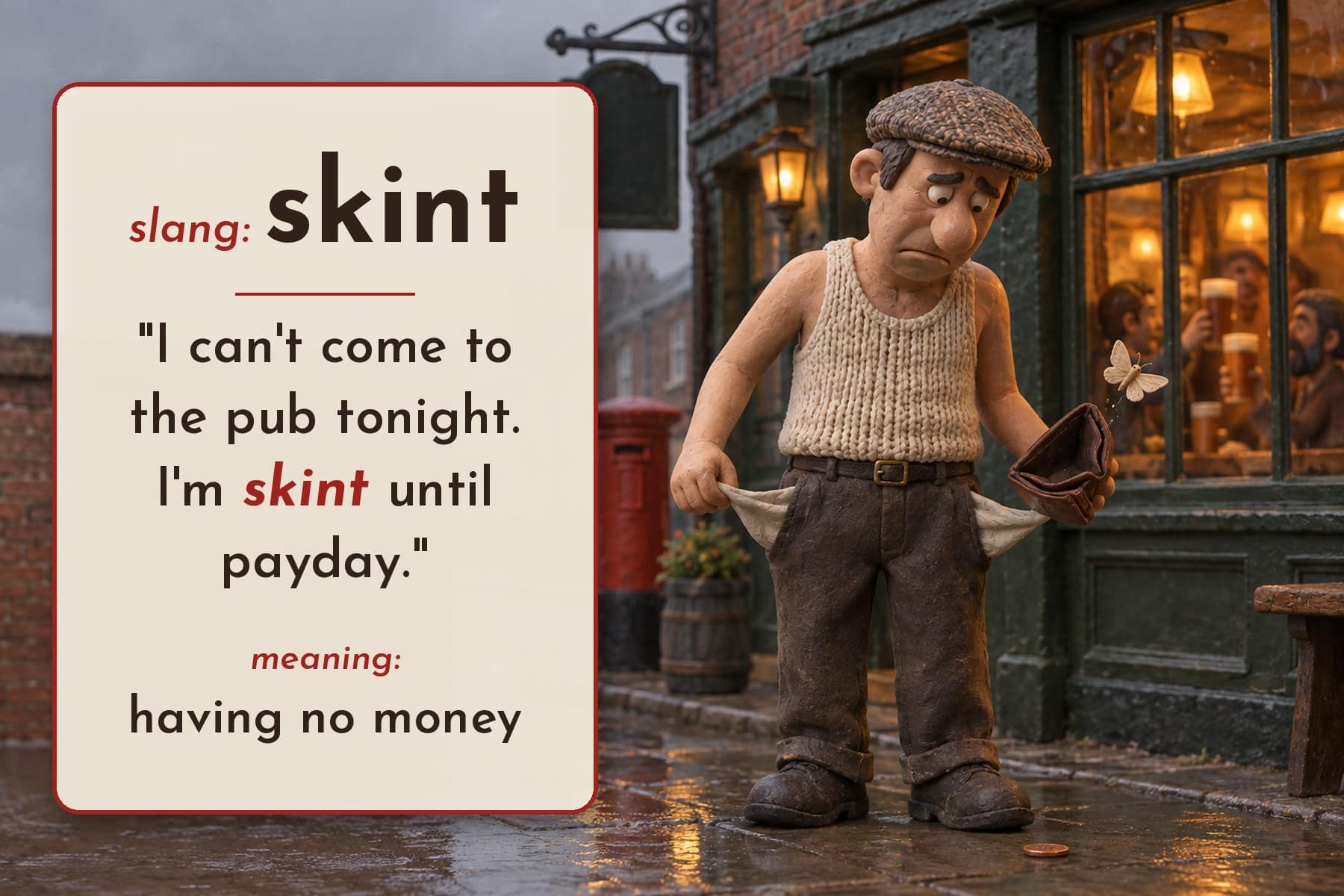
It’s the end of the month and your wallet is empty? Then you are skint: you have no money. It’s informal, very common, and a lot friendlier than saying “I’m poor”.
“I’d love to come to the cinema tonight, but I can’t. I’m totally skint.”
Full lesson: Skint
Eight – Kerfuffle
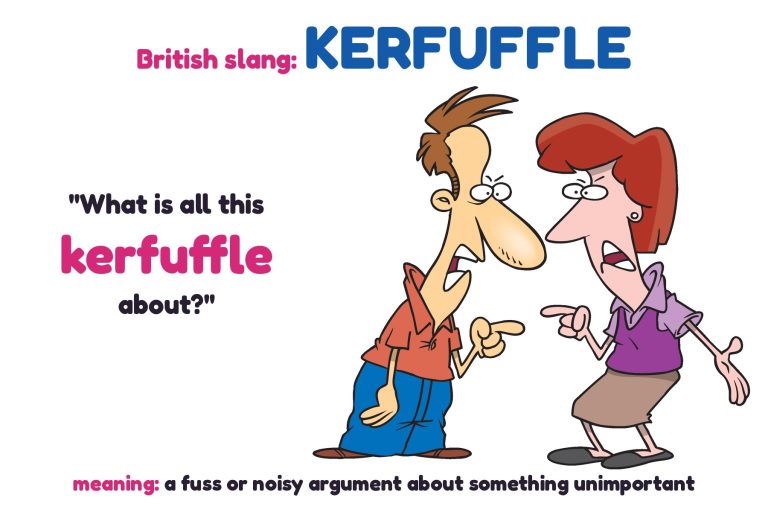
A kerfuffle is a fuss or noisy argument, usually about something that isn’t very important. It probably comes from Scots, it’s almost always used in a light-hearted way, and it’s just a fun word to say!
“Why are they making such a fuss over a parking space? What a kerfuffle over nothing!”
Full lesson: Kerfuffle
Seven – Cuppa
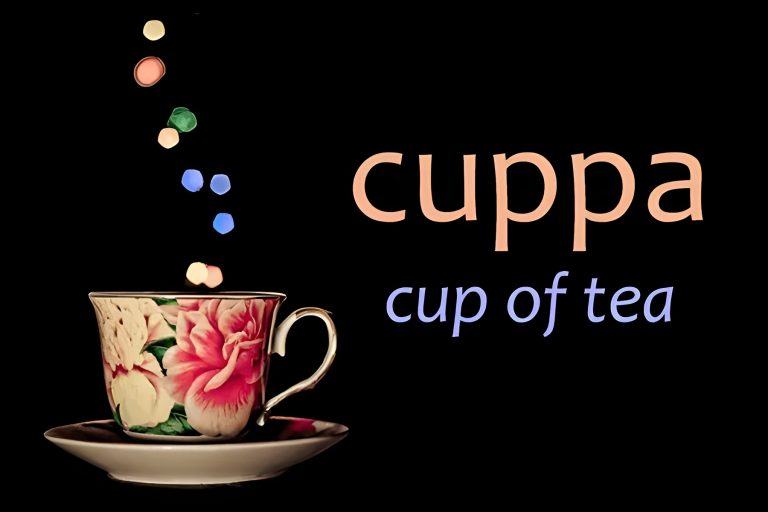
Nothing is more British than this one. A cuppa is a cup of tea, and you’ll hear the word constantly: at home, at work, or from a friend putting the kettle on.
“I think it’s time for a break. Does anyone fancy a cuppa?”
Full lesson: Cuppa
Six – Quid
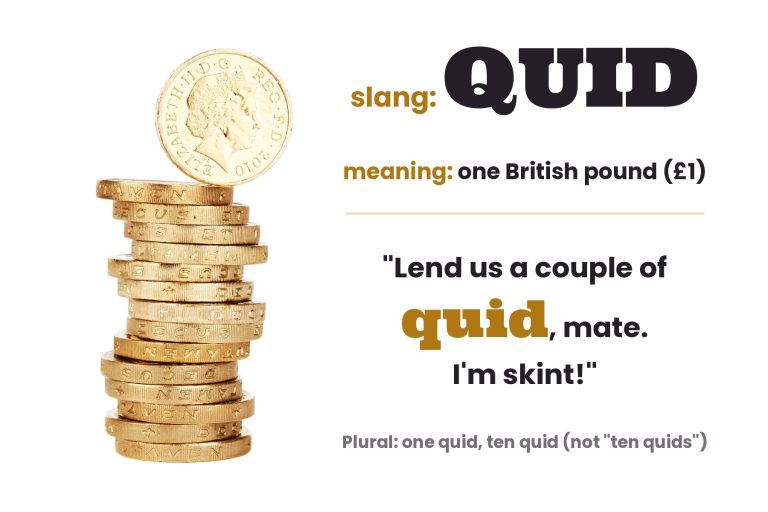
A quid is one pound (£1), in the same way that Americans say bucks for dollars. The plural is usually just quid: five quid, twenty quid. If you’re quids in, you’ve made or saved some money.
“Can you lend me twenty quid until Friday?”
Full lesson: Quid
Five – Numpty
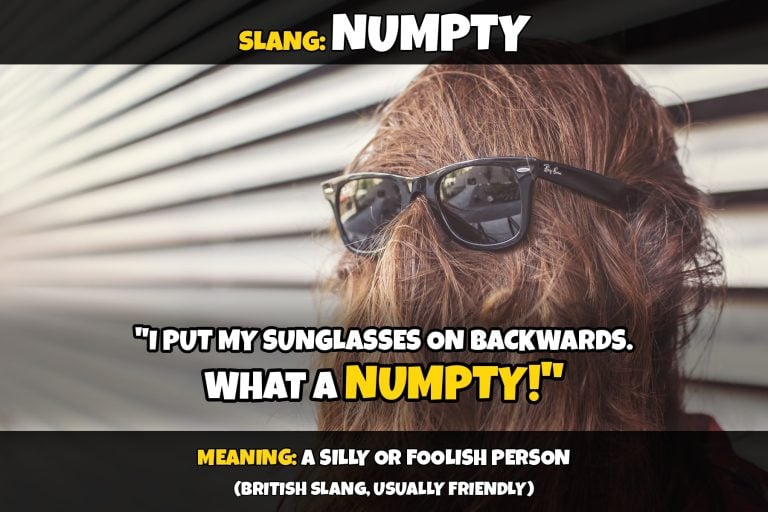
Every language needs a friendly insult. A numpty is a silly or foolish person. The word comes from Scotland but is now used all over the UK, often affectionately, about friends and family (and politicians).
“You can’t wear pyjamas to a wedding, you complete numpty!”
Full lesson: Numpty
Four – Hullabaloo

Some words are just fun to say, and this is one of them. A hullabaloo is a commotion, an uproar or a big fuss, usually a noisy one. Like kerfuffle, it’s often used when people are making far too much noise about something small.
“I only wanted to borrow a book, but the librarian created a hullabaloo over nothing!”
Full lesson: Hullabaloo
Three – Gobsmacked
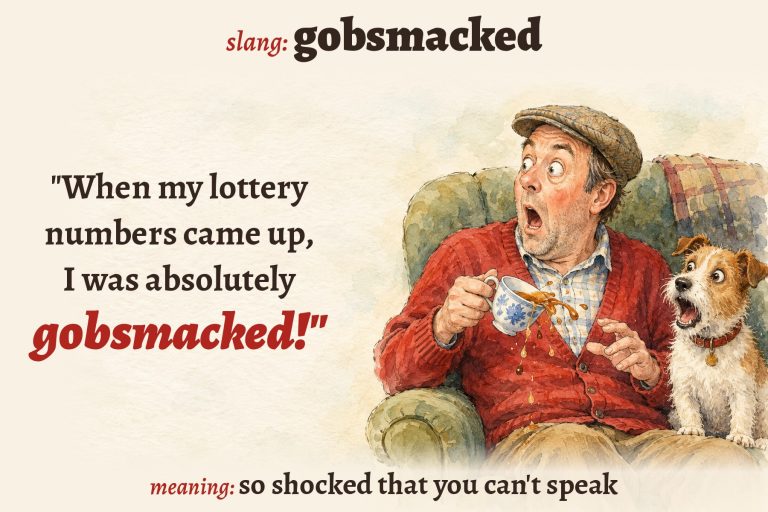
Gob is British slang for mouth. If you are gobsmacked, you are so shocked that you can’t speak, as if someone has smacked a hand over your mouth. It’s informal but not rude: you’ll even hear it on the news.
“My brother was gobsmacked when his husband bought him a brand new car!”
Full lesson: Gobsmacked
Two – Chuffed
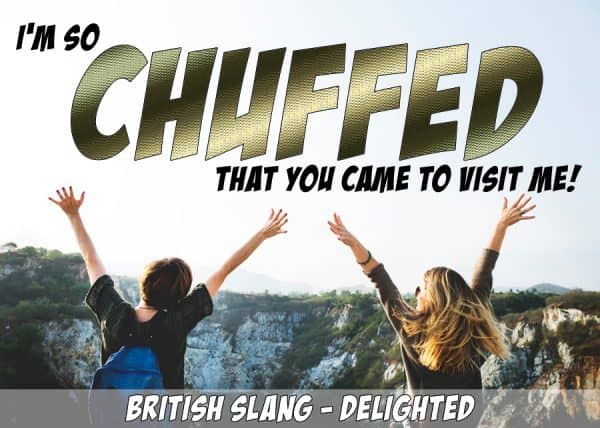
If you are chuffed, you are very happy, delighted or proud. And if you’re extremely happy about something, you can say you’re chuffed to bits.
“He was chuffed to bits when he got the promotion he’d been hoping for.”
Full lesson: Chuffed
One – Knackered
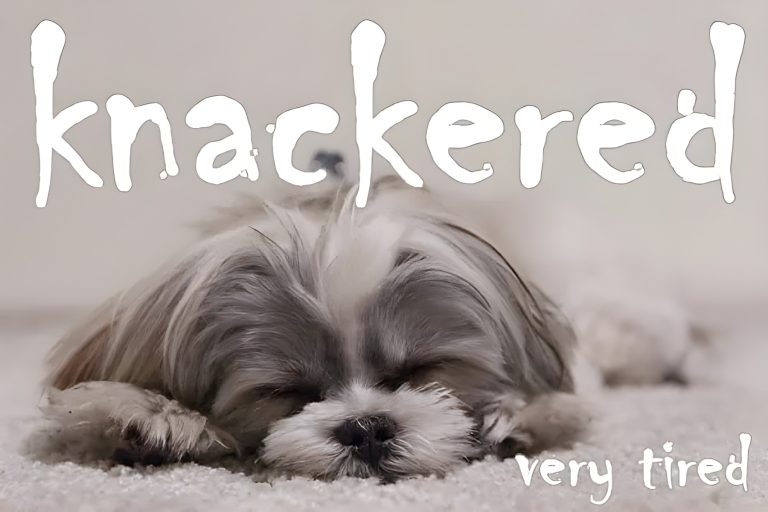
Our number one is the word every visitor to Britain learns first. Long day? You’re not just tired, you’re knackered: extremely tired. It can describe things too: a knackered old car is worn out. In rhyming slang, it becomes cream crackered.
“I’ve been playing football all afternoon and now I’m utterly knackered!”
Full lesson: Knackered
Those are our top ten. Now here are all 50, sorted by topic.
People
From your best mate to the local numpty: the words Brits use for each other. Most of the insults are friendly ones!
| Expression | Meaning | Example |
|---|---|---|
| Bloke | A man. | My neighbour’s a great bloke. He helped me carry the sofa upstairs. |
| Mate | A friend. | My mates are coming over later to watch the footy. |
| Numpty (Scottish) | An idiot; a silly or foolish person. Often used affectionately. | You can’t wear pyjamas to a wedding, you complete numpty! |
| Twit | A foolish or silly person. | Jack looked for his glasses for an hour. They were on his head the whole time. He’s such a twit! |
| Daft | Foolish or silly. | You want to play tennis? Don’t be daft, mate, it’s raining cats and dogs out there! |
| Gormless | Stupid, foolish or clueless. | He stood there with a gormless look on his face while the bus drove off without him. |
| Curtain-twitcher | A nosy person who secretly watches the neighbours. | Sit down and stop spying on the neighbours! You’re such a curtain-twitcher! |
| Chav (often offensive) | A young person who behaves loudly and badly. Use this one carefully: many people find it offensive. | The newspaper was criticised for calling the teenagers chavs. |
| The Old Bill | The police. | You’d better watch out, boys. I’ve just seen the Old Bill down the road. |
| A few sandwiches short of a picnic | Not very clever. A bit rude, but usually said as a joke. | This is the third time Mary has got lost in the supermarket. She’s clearly a few sandwiches short of a picnic! |
Feelings
Happy, shocked, exhausted or jealous: British English has a brilliant word for it.
| Expression | Meaning | Example |
|---|---|---|
| Chuffed | Very happy, delighted or proud. Extra happy? You’re chuffed to bits. | He was chuffed to bits when he got the promotion he’d been hoping for. |
| Gobsmacked | Totally shocked or astonished; so surprised that you can’t speak. | My brother was gobsmacked when his husband bought him a brand new car! |
| Knackered | Extremely tired. | I’ve been playing football all afternoon and now I’m utterly knackered! |
| Well jel | Very jealous. | She got tickets to the sold-out show. I’m so well jel. |
| Full of the joys of spring | Very happy and full of energy. | I can’t believe you’re so full of the joys of spring on a Monday morning! |
| As sick as a parrot | Very disappointed. | That player must be as sick as a parrot after missing that last-minute penalty! |
| Like the cat that got the cream | Looking very pleased with yourself. | Tom’s been grinning like the cat that got the cream since he passed his driving test! |
Food, Drink & Money
Tea, potatoes and pounds: three things the British talk about a lot.
| Expression | Meaning | Example |
|---|---|---|
| Cuppa | A cup of tea. | I think it’s time for a break. Does anyone fancy a cuppa? |
| Spuds | Potatoes. | Can you pick up some spuds at the supermarket? I want to make mash tonight. |
| Plonk | Cheap wine. | I don’t want to cook tonight. Let’s grab a bottle of plonk and order pizza! |
| Quid | A pound (£1). The plural is usually quid too: ten quid. | Can you lend me twenty quid until Friday? |
| Skint | Having no money. | I’d love to come to the cinema tonight, but I can’t. I’m totally skint. |
| Cheap as chips | Very inexpensive. | We ordered loads of food and drink, but the bill was as cheap as chips! |
Everyday Things
The telly, your brolly and a spot of Cockney rhyming slang.
| Expression | Meaning | Example |
|---|---|---|
| Telly | Television. | Did you see the new James Bond film on the telly last night? It was cracking! |
| Brolly | An umbrella. | It’s raining cats and dogs today. Don’t forget your brolly! |
| Dicky bow | A bow tie. | I’ve bought myself a dapper dicky bow for Tracy’s wedding next month. |
| Moggy | A cat, especially an ordinary one that isn’t a pedigree. | Your little moggy is so cute! |
| Footy | Football (soccer). | Are you watching the footy this weekend? |
| Rugger | Rugby. | The lads are meeting up for a game of rugger later. |
| Dog and bone (Cockney rhyming slang) | Telephone. | Please turn down your music! Dad is on the dog and bone! |
| Apples and pears (Cockney rhyming slang) | Stairs. | Looking for the bathroom? Go up the apples and pears and it’s on your right. |
Fuss, Arguments & Nonsense
The British love a good fuss, and they have plenty of words for one.
| Expression | Meaning | Example |
|---|---|---|
| Banter | Playful, friendly teasing between people. | I really enjoyed your dinner party last night. There was a lot of good-natured banter. |
| Kerfuffle | A fuss or noisy argument, usually about something unimportant. | Why are they making such a fuss over a parking space? What a kerfuffle over nothing! |
| Hullabaloo | A commotion, uproar or fuss. | I only wanted to borrow a book, but the librarian created a hullabaloo over nothing! |
| Argy-bargy | A noisy or lively argument. | Looks like a bit of argy-bargy going on over there. I think it started over a spilled pint! |
| Codswallop | Nonsense. | The dog ate your homework again? I’ve never heard such codswallop! |
| Storm in a teacup | A lot of fuss about something small and unimportant. | I don’t know why they’re making such a big deal about last night’s argument. It was just a storm in a teacup! |
| Go pear-shaped | To go wrong. | My boyfriend has left me and now the dog has eaten my new shoes. It’s all gone pear-shaped! |
Describing Things
Four quick ways to say something is great, fine, or nothing at all.
| Expression | Meaning | Example |
|---|---|---|
| Cracking | Excellent or very good. | We went to see a film, then went dancing until 3am. It was a cracking night! |
| Tickety-boo | Fine; in good order. | Mr Jones checked my report and told me it was all tickety-boo! |
| Dench | Fantastic or impressive. | Have you been to the new club in Mayfair yet? It’s totally dench! |
| Nowt (Northern English) | Nothing. | I can’t believe my brother got me nowt for Christmas. I got him a new phone! |
Things Brits Say & Do
Hurrying up, saying goodbye, avoiding work and never, ever showing your feelings.
| Expression | Meaning | Example |
|---|---|---|
| Cheerio | Goodbye. | It was wonderful to see you today. Cheerio! |
| Get a wriggle on | Hurry up! | What’s taking you so long? If you don’t get a wriggle on, we’re going to miss our flight! |
| Skive | To avoid work or school, usually by staying away without permission. | I don’t want to go to work today. Let’s skive off and spend the day in bed! |
| Pull your socks up | To make more effort and do better. | You’ll have to pull your socks up and study more. Your final exam is next week! |
| Touch wood | Said, often while touching something wooden, to keep bad luck away. | I haven’t had a cold all winter, touch wood. |
| Keep a stiff upper lip | To hide your emotions when you are upset. | It’s only a game of football. Please try to keep a stiff upper lip! |
| Wouldn’t say boo to a goose | Very shy and timid. | He’s a lovely bloke, but he wouldn’t say boo to a goose! |
| Throw a spanner in the works | To cause a problem that stops a plan from going smoothly. | We wanted to get married in January, but my mother-in-law has thrown a spanner in the works. She’s going to Australia! |
New on FunkyEnglish
Our latest British slang lessons, added since the list above:
- Naff: uncool, cheap-looking or in poor taste.
- Plonker: a silly or foolish person, made famous by Del Boy.
- Are Brits Still Saying “Marvellous”? Which British words are fading, and which are here to stay.
More British Culture
Slang is only half the story. These lessons explain some very British habits:
- Pinch Punch, It’s The First Of The Month!: what Brits say (and do) on the first day of every month.
- Real English Greetings: what British people actually say instead of “How do you do?”.
- British Culture – Tea: the nation’s favourite drink.
- British Culture – Fish And Chips: the classic British takeaway.
You can also browse everything in our Proper British collection, or see all our slang lessons.
Frequently Asked Questions
British slang is the informal, everyday vocabulary used in the UK, such as mate (friend), quid (pound) and knackered (very tired). You’ll hear it in conversation, on TV and online, but not usually in formal writing.
Some of the most common are mate (friend), bloke (man), cuppa (cup of tea), quid (pound), skint (no money), knackered (very tired), chuffed (very pleased), gobsmacked (shocked) and banter (friendly teasing).
Most of it isn’t. Words like cuppa, telly, brolly and chuffed are friendly and safe to use with anyone. A few words, such as chav, can be offensive, so learn what they mean but use them carefully.
It is a kind of slang from East London in which a word is replaced by a phrase that rhymes with it. For example, dog and bone means phone, and apples and pears means stairs.
Yes, with friends and in relaxed situations. Start with a few safe, common words such as mate, cuppa and knackered. Avoid slang in exams, essays and job interviews.
Test Yourself
What is FunkyEnglish?
FunkyEnglish is a website that helps you improve your English. We offer quick lessons that teach idioms, slang, phrasal verbs and more. Visit our homepage to see our latest articles, or use the menu to find specific content!

