British English Slang – Quid.
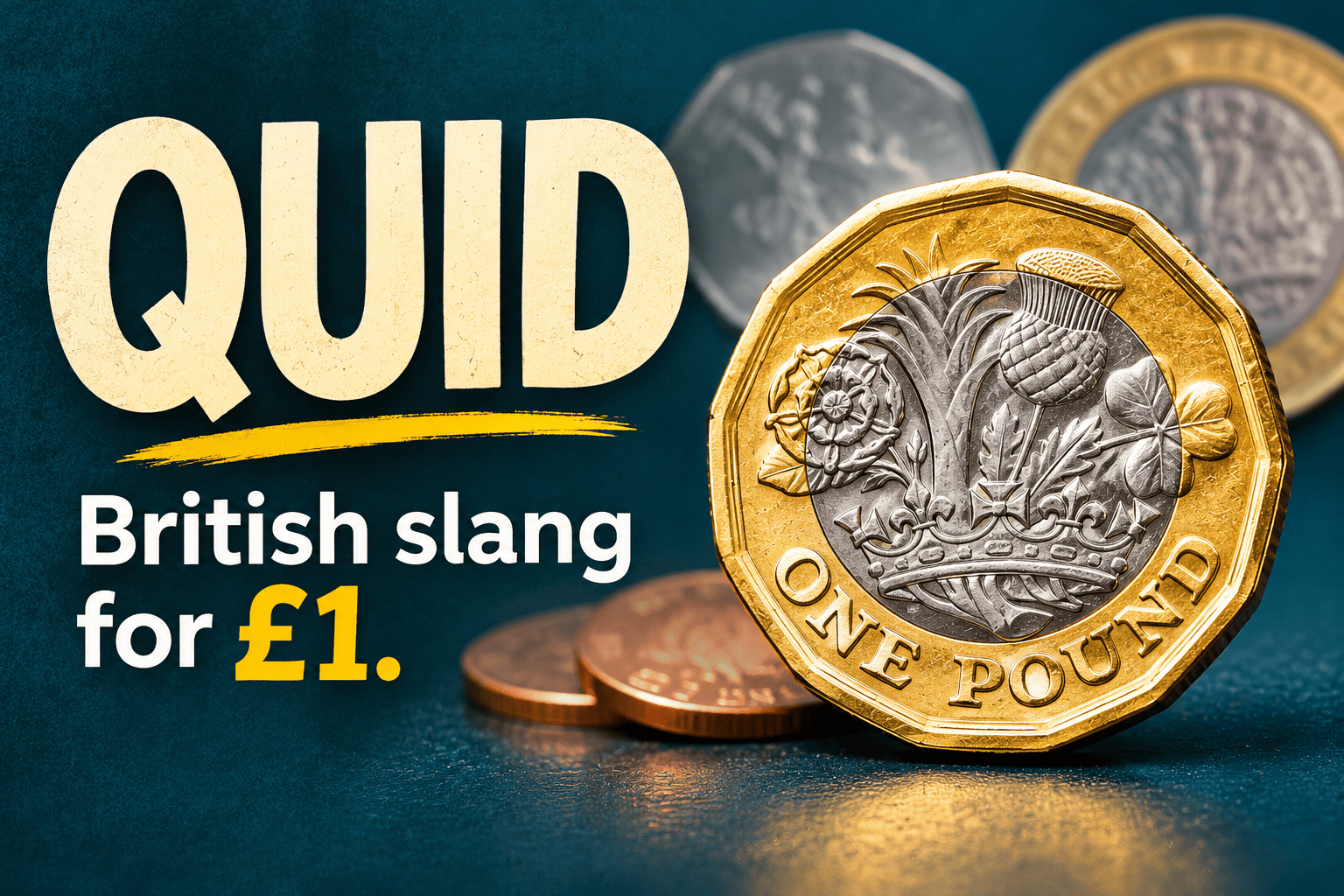
Meaning: Quid is an informal British English word for one pound sterling (£1). It is used for amounts of money, just as buck is used for dollars in American English.
The word normally stays the same after a number: “one quid”, “five quid” and “twenty quid”.
Quids in means financially better off, often because you have made a profit or saved money. This fixed expression uses quids, even though normal amounts use quid.
A few quid means a small amount of money.
British Slang for Money:
These terms are informal, and usage varies by region and speaker. Start with quid, fiver, tenner and grand; the more colourful terms are not equally common everywhere.
Money generally
- Dosh: money, in informal British English.
- Lolly: money, an old-fashioned slang term.
- Wonga: money, a colourful British slang term.
- Wedge: a bundle of banknotes, or a large amount of money.
Specific amounts in British money
- Fiver: £5, especially a £5 note.
- Tenner: £10, especially a £10 note.
- Grand: £1,000. Say “two grand” for £2,000.
- Score: £20, slang particularly associated with London.
- Ton: £100 in money slang.
- Monkey: £500, slang particularly associated with London.
Coins and loose change
- Shrapnel: loose change, especially small coins.
- Nugget: a less common slang term for a £1 coin.
For more expressions and lessons, explore the Money theme.
Example:
- “I’m totally skint mate! Any chance you could lend me a few quid?“
- “I paid five quid for it.”
- “He bought the bike for £20 and sold it for £50. He’s quids in!”
In The News:
KIDS FOR A QUID AGAINST SHREWSBURY TOWN
What is slang?
Slang is very informal language. It’s usually spoken rather than written, and is often used by a particular group of people or in a particular place. Slang changes over time, and using it well is a great way to sound more natural when speaking English.
Frequently Asked Questions
“Quid” normally stays the same after a number: “one quid”, “five quid” and “twenty quid”. The fixed expression “quids in” uses “quids” and means financially better off.
The exact origin of “quid” is uncertain. Several explanations have been suggested, but none is established.
Yes. In British English, a quid is one pound sterling. In Australia, it historically meant a pound before decimal currency; it also survives in expressions such as “make a quid”, meaning earn money.
Test Yourself
What is FunkyEnglish?
FunkyEnglish is a website that helps you improve your English. We offer quick lessons that teach idioms, slang, phrasal verbs and more. Visit our homepage to see our latest articles, or use the menu to find specific content!