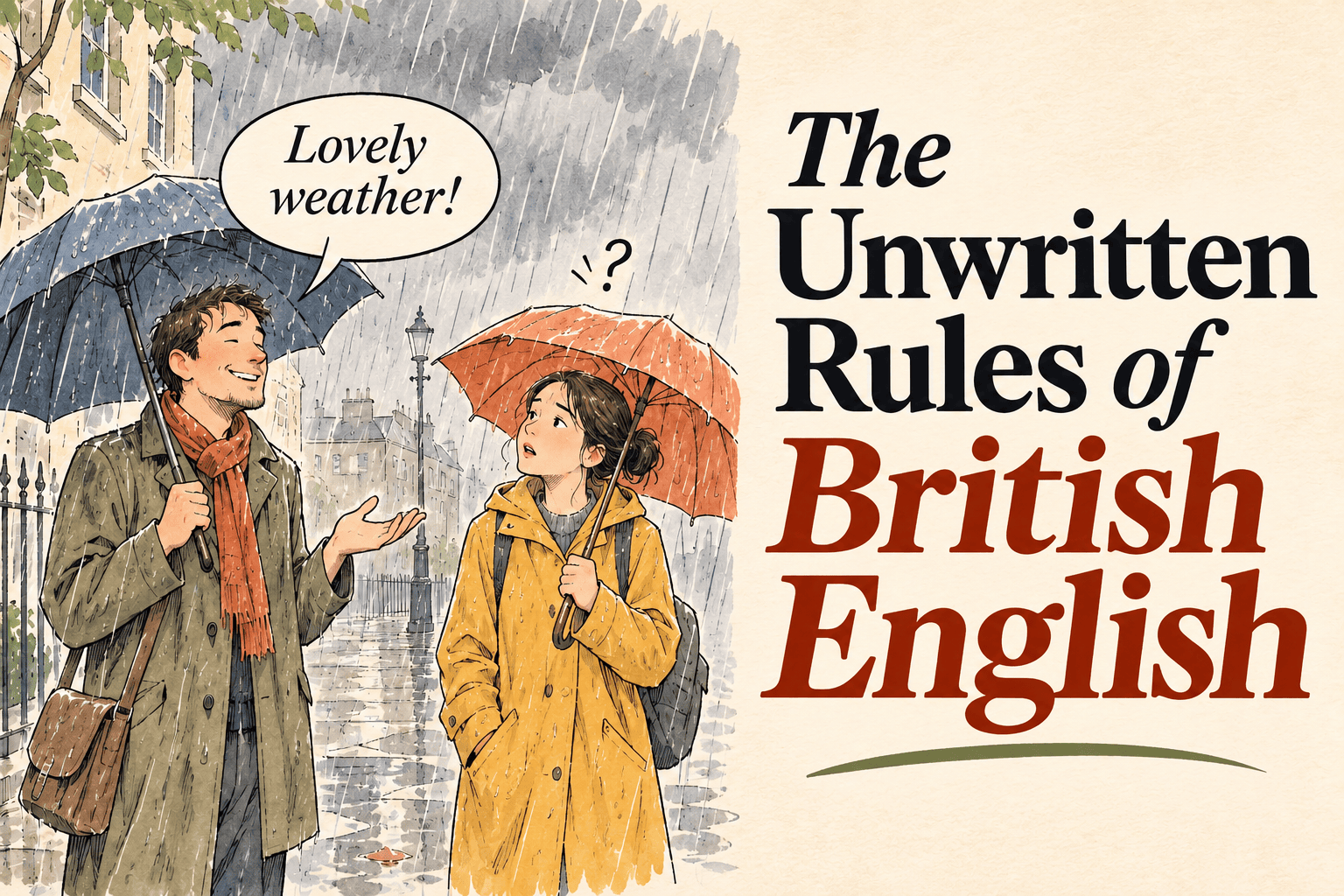
What British people say, what they might mean, and how to avoid getting it spectacularly wrong.
You’ve spent years learning English. You know your grammar, you’ve memorised hundreds of useful expressions, and you can follow a conversation without too much trouble. Then someone in Britain says, “You alright?”
You begin explaining that you’re feeling perfectly healthy, thank you very much. They look slightly surprised. Welcome to the unwritten rules of British English.
A simple question might be a greeting. A polite suggestion might be a warning. And a remarkably enthusiastic “Well, that’s interesting” might require a little more investigation. Age, personality, region, situation and the relationship between speakers all matter. Here are seven conversational habits worth recognising.
1. Greetings That Aren’t Really Questions
“You alright?” Imagine you’re walking into work. A colleague passes you in the corridor and says, “Alright?” If you stop and ask why you look ill, they may be as puzzled as you are. They were probably just saying hello.
What might they mean?
In everyday British English, alright?, you alright? and alright, mate? often work like “Hello” or “How are things?” You can keep your answer short.
Alex “Alright?”
Sam “Yeah, good thanks. You?”
Alex “Not bad.”
What to notice “Alright?” often works as an informal hello.
Alex “Alright?”
Sam “Alright.”
Yes, that can be the entire conversation. The same word works as both the greeting and the response.
Nobody needs to produce a medical report. If you’ve just fallen over and a friend stops to ask “Are you alright?”, the concern is probably genuine. Listen to the tone and look at what’s happening.
 Explore FurtherReal English GreetingsDiscover everyday British greetings and learn how to respond naturally.
2. The Art of Understatement
“We might have a slight problem.” There’s paper everywhere, something smells unpleasant and the display is flashing an error message. The office printer appears to be preparing for retirement.
Understatement means describing something in less dramatic terms than the situation might justify. A speaker might use it to stay calm, soften criticism or introduce bad news gently.
What someone says “We might have a slight problem.”
What the situation suggests The problem could be much more serious than the words imply.
What to listen for Tone, circumstances and what the speaker says next.
Expressions worth recognising
“Not bad.” This can range from satisfactory to genuinely impressive. “Could be better.” Something is probably going less well than hoped. “A bit disappointing.” This might soften fairly strong criticism. “That’s quite interesting.” It could be genuine interest, polite uncertainty or the start of several questions.
Be careful with “quite”
Quite good can mean fairly good. Stress, tone and the choice of adjective make a difference. Quite impossible, for instance, means completely impossible. If the words sound unusually calm for the situation, listen to what the speaker says next. At work, try asking “How serious is the problem?”
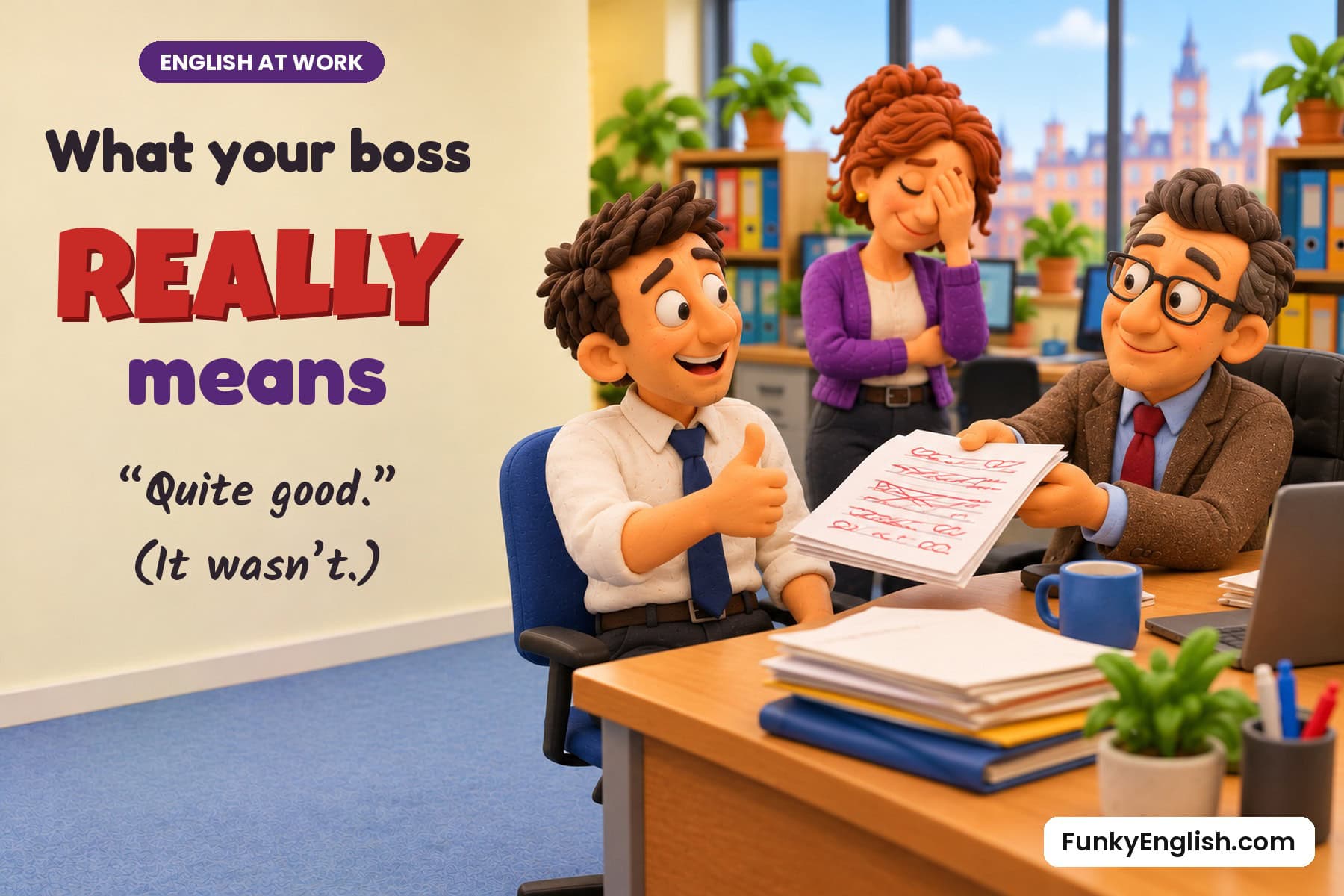 Explore FurtherWhat British Colleagues Really MeanExplore understatement, indirect criticism and the language of British workplaces.
3. The British Apology
“Sorry, could I just squeeze past?” You’re standing in the supermarket aisle. Someone wants to reach the milk behind you. Nobody’s done anything wrong. Nevertheless, someone has apologised.
Four uses of “sorry”
“Sorry, I broke your mug.”
The speaker accepts responsibility.
“Sorry, could I ask you something?”
The speaker wants your attention.
“I’m sorry to hear that.”
The speaker is responding to bad news.
“Sorry, could I get through?”
The speaker is asking you to move.
In a narrow doorway, two people step left, then right, then left again. “Sorry.” “No, sorry.” “After you.” Eventually, someone gets through. If you need to get someone’s attention or move past them, “Excuse me” works too. Compare How to Apologise at Work and How to Ask for Help Politely.
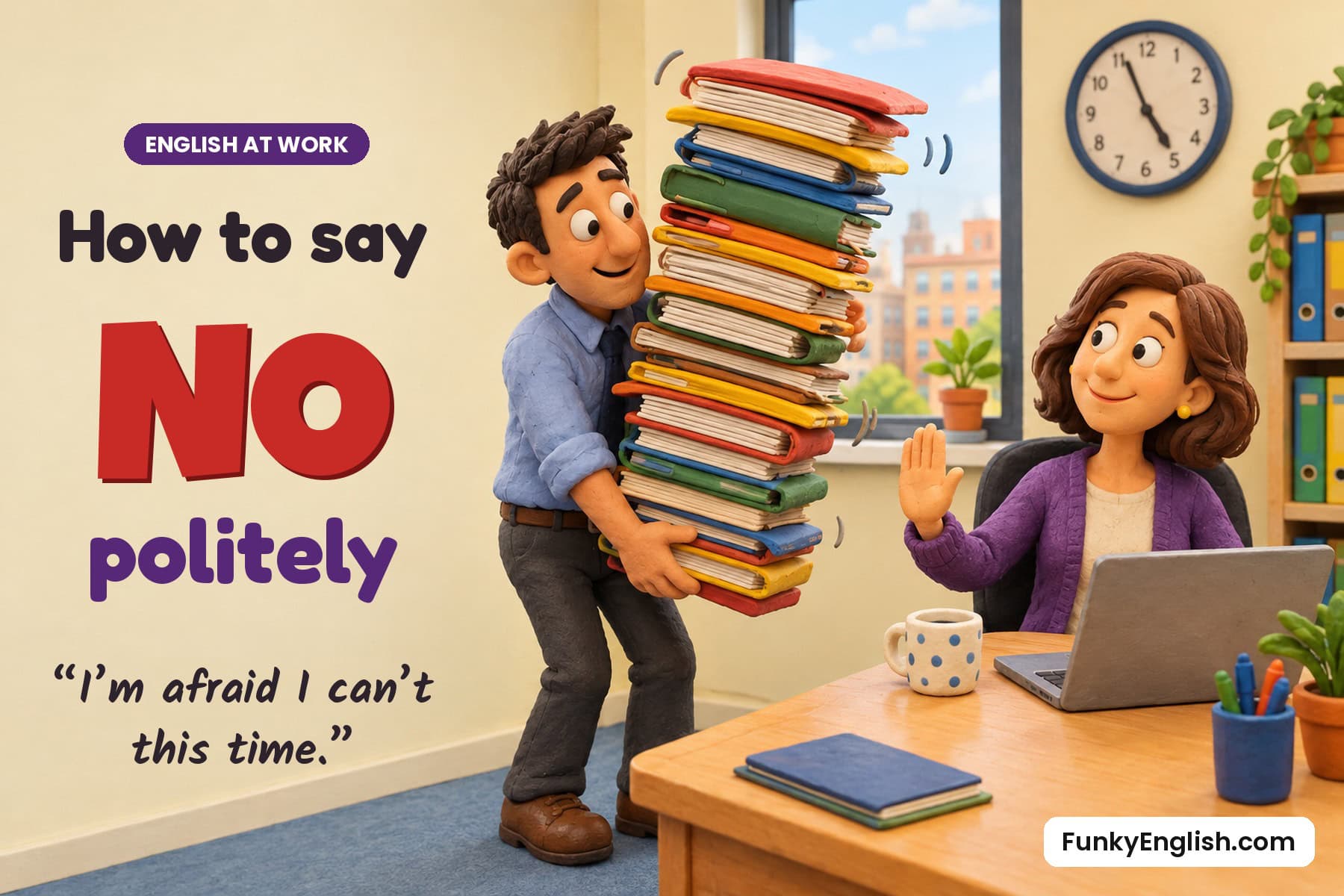
4. Saying No Without Actually Saying No
“I’ll see how things go.” A friend asks whether you’re coming to a party on Saturday. You may be checking your plans or looking for a gentle way to decline. The same answer can do either job.
Common indirect responses
“Maybe another time.” This could suggest a future possibility or gently turn down the invitation.
“I’ll let you know.” The speaker hasn’t committed.
“I’m not sure I can make it.” Attendance sounds uncertain or unlikely.
“That might be difficult.” The obstacle may be significant, especially if the speaker offers no way around it.
What to notice An indirect reply leaves room for uncertainty.
Give people room to decline with “No pressure. Just let me know.” When you need to book a table, ask “Could you let me know by Thursday?” A specific deadline saves both people from guessing. See How to Say No Politely and How to Disagree Politely.
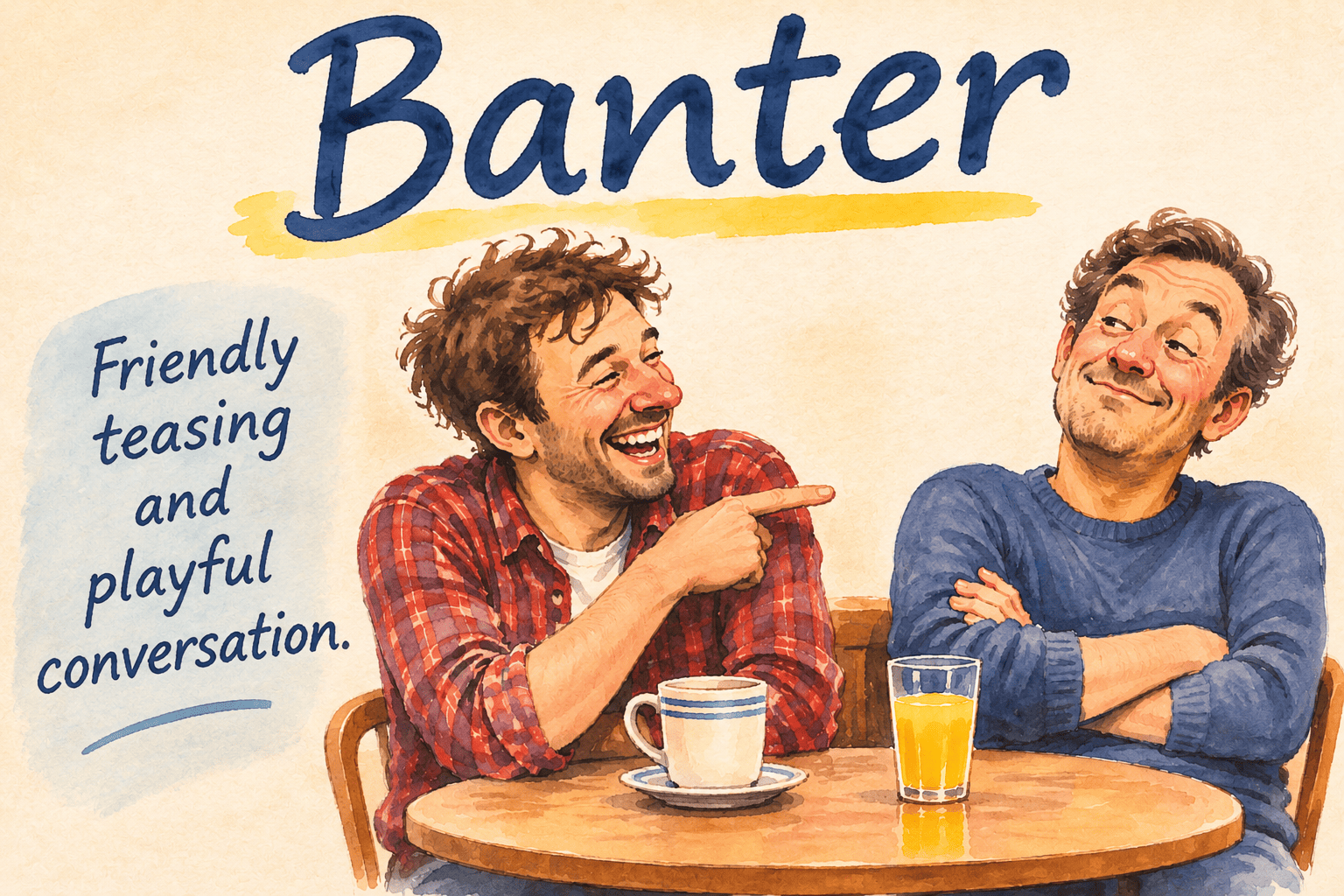
5. Banter, Teasing and Sarcasm
“Oh, you’re a genius, aren’t you?” You spend ten minutes looking for your glasses. You’re wearing them. A close friend notices and calls you a genius. The words sound like praise, but the situation suggests playful sarcasm.
Three expressions to know
Banter is playful conversation that often involves teasing. “There’s always a bit of banter between the players.”
Taking the mickey means making fun of someone. It can be affectionate or unkind. “Are you taking the mickey? You can’t seriously expect me to finish all that!”
A Ruder Alternative: Taking the Piss
In informal British English, taking the piss is vulgar. It can mean mocking someone or acting in a way that seems unreasonable or insulting. “£15 for a sandwich? They’re taking the piss!” is a complaint about the price.
You may hear it among friends. In professional settings, avoid it. For playful teasing, taking the mickey is a milder choice.
Pulling someone’s leg means joking by trying to make someone believe something untrue. “I’ve won a million pounds!” “You’re pulling my leg!”
Friendly or rude?
“Nice haircut. Lose a fight with a lawnmower?”
Between close friends The joke may be affectionate, and both might laugh.
From a manager to a new employee The same joke could feel humiliating.
Listen to the tone, consider how well the people know each other and notice whether the person being teased is enjoying it. If you’re unsure, you can ask “Are you joking?”
6. Reading the Room
You arrive at a gathering. Everyone’s speaking quietly because someone has just shared upsetting news. You decide this would be an excellent moment for a joke. It isn’t. To read the room is to notice the mood and adapt what you say or do. It’s a useful skill anywhere, especially when the social expectations are unfamiliar.
The same words in different situations
Someone scores a goal. “Nice one!” is likely sincere praise.
A friend drops the ball. “Nice one!” in a dry tone could be playful sarcasm.
Listen for Tone, context, the relationship and how others react.
If you’re unsure, listen for a little longer.
Try reading the room
A colleague has just given a difficult presentation. “Well, that was a disaster!” might get a laugh from a close friend who’s already joking about it. If your colleague looks upset, try “That was a difficult situation. Are you alright?”
7. The Art of Playing Yourself Down
“Oh, it was nothing.” Your colleague has spent three weeks organising an event. It goes brilliantly. You tell them they did an amazing job. They shrug and say, “Oh, it was nothing.” Nothing? They’ve barely slept since Tuesday.
Self-deprecation means speaking modestly or critically about yourself. People may use it to avoid sounding boastful, put others at ease or make a joke.
Expressions worth recognising
“Oh, it was nothing.” The speaker may be playing down the work behind an achievement.
“I just got lucky.” They may feel luck helped, or they may be sharing the credit.
“I’m not very good at this.” Sometimes it’s a genuine admission. Sometimes the person turns out to be remarkably competent.
“Not my finest moment.” A dry way to acknowledge a mistake.
How should you respond?
Alex “That presentation was excellent.”
Sam “Oh, it was nothing.”
Alex “Well, I thought you explained everything really clearly.”
Self-deprecating humour is common in some British conversations. People vary in how comfortable they feel accepting compliments, and you can sound perfectly natural without putting yourself down.
The Most Important Unwritten Rule
Sometimes “not bad” means exactly that. Sometimes “I’ll let you know” means someone needs to check their diary. And sometimes “You alright?” means someone is genuinely worried. Listen to the words, watch how people respond and ask when you need a clearer answer. You might even get through a Monday morning without giving anyone your medical history.
British English: Your Quick-Reference Guide
Not sure what someone means? Start with the most common interpretation, then check the situation.
| Phrase | Usually means | Check for |
|---|---|---|
| Phrase“Alright?” | Usually meansAn informal greeting | Check forGenuine concern in the speaker’s voice |
| Phrase“Not bad.” | Usually meansSomething is reasonably good, sometimes better | Check forTone and enthusiasm |
| Phrase“A bit of a problem.” | Usually meansThere’s a problem, possibly a serious one | Check forHow serious the situation actually is |
| Phrase“Sorry, could I…?” | Usually meansA polite request or interruption | Check forWhat the speaker is asking |
| Phrase“I’ll let you know.” | Usually meansNo decision has been confirmed | Check forWhether a definite answer follows |
| Phrase“Taking the mickey.” | Usually meansTeasing or making fun of someone | Check forWhether the teasing is welcome |
| Phrase“Nice one!” | Usually meansPraise or, sometimes, sarcasm | Check forTone and circumstances |
| Phrase“Oh, it was nothing.” | Usually meansModesty or minimising an achievement | Check forThe effort involved |
Your Turn: Make It More Polite
These sentences are grammatically correct, but they may sound too direct in some situations. Try a more tactful version before revealing a possible answer.
Giving Feedback
Original “This report is terrible.”
Rewrite this as constructive feedback to a colleague.
Show a Possible Answer
“I think this report needs quite a bit more work.”
This identifies a problem with the report without attacking the person who wrote it.
Declining an Invitation
Original “I don’t want to go to your party.”
Decline a friend’s invitation politely.
Show a Possible Answer
“Thanks for inviting me, but I won’t be able to make it.”
You decline clearly and acknowledge the invitation. You don’t need to invent an excuse.
Disagreeing
Original “You’re wrong.”
Disagree with someone in a professional conversation.
Show a Possible Answer
“I’m not sure I agree with that.”
This expresses disagreement while leaving room for discussion.
Sometimes a direct answer is the kindest and most helpful one. Choose wording that fits the situation.
What Did They Really Mean?
Can you work out the most likely meaning in these seven everyday situations? Read each one carefully and choose the best answer.
- A colleague passes you in the corridor, smiles and says “Alright?” What’s the most likely interpretation?
- They’re asking whether you need help.
- They’re greeting you casually.
- They’re checking whether you’re feeling well.
- They’re asking how your work is going.
- The office computer system has stopped working. Your manager calmly says “We might have a slight problem.” What should you understand?
- The problem is minor because the manager sounds calm.
- The manager is being sarcastic about the IT team.
- The manager hasn’t found any evidence of a problem.
- The manager may be understating a serious problem.
- Someone in a supermarket says “Sorry, could I just get past?” What is the most likely purpose of “sorry”?
- To soften a polite request.
- To apologise for bumping into you.
- To acknowledge that they’re blocking the aisle.
- To ask you to repeat what you said.
- You invite a colleague to dinner. They say “I’m not sure I can make it. I’ll let you know.” What’s the best response?
- Take it as a polite refusal and withdraw the invitation.
- Reserve a place because they haven’t declined.
- Leave it unconfirmed and ask when you need a decision.
- Ask why they haven’t decided yet.
- Two close friends are laughing. One makes a silly mistake and the other says “Oh, you’re a genius!” What’s most likely?
- They’re sincerely praising how their friend handled it.
- They’re teasing their friend with playful sarcasm.
- They’re using the joke to signal real annoyance.
- They’re repeating a compliment from an earlier conversation.
- A colleague has just received upsetting news. Someone starts making jokes. What’s the main communication problem?
- The jokes use language that’s too informal for work.
- The speaker hasn’t explained the jokes clearly enough.
- The speaker has started talking before their turn.
- The speaker’s tone doesn’t fit the mood.
- A colleague smiles and says “We should get together sometime.” They change the subject without suggesting a date. What can you reasonably conclude?
- They’re making a real invitation and expect you to suggest a date.
- They’re just being friendly and would prefer to leave it there.
- They’re indirectly saying they’d rather not meet outside work.
- Their intention is unclear, so you could ask about making a plan.
Answer Key
- B. They’re greeting you casually. In a passing exchange, “Alright?” is usually a greeting. “Alright?” or “Yeah, good thanks. You?” works as a reply.
- D. The manager may be understating a serious problem. “Slight” suggests a small problem, but the system has stopped working entirely. The situation is the clue.
- A. To soften a polite request. “Sorry” can introduce a polite request. Here the speaker is asking for space.
- C. Leave it unconfirmed and ask when you need a decision. Your colleague may be undecided or declining indirectly. If you need to book, ask politely when they can confirm.
- B. They’re teasing their friend with playful sarcasm. The positive words follow a mistake. Their friendship and shared laughter make playful sarcasm the most likely reading.
- D. The speaker’s tone doesn’t fit the mood. Reading the room means noticing the mood and adapting. Even a harmless joke can land badly when someone is distressed.
- D. Their intention is unclear, so you could ask about making a plan. It could be a genuine suggestion or friendly conversation. If you’re interested, ask “That would be lovely. Shall we arrange something?”
Frequently Asked Questions
Some British speakers soften requests, criticism or refusals to sound polite or avoid confrontation. Communication styles vary between individuals, regions and situations.
It can. “Not bad” may express approval, modest praise or a relatively neutral assessment. The intended meaning depends on tone and context.
“Sorry” can express regret or sympathy. It can also soften interruptions and requests for space. Listen to what the speaker says after it.
Sarcasm can be playful, affectionate, critical or hurtful. Consider the relationship between speakers and the other person’s reaction.
Listen to the whole conversation. Tone, context, relationships and body language all offer clues. If something is unclear, ask politely.
Over to You
What’s the most confusing thing a British person has ever said to you?
Was it a greeting, a joke, a polite refusal or something completely unexpected?
Tell us what happened and what you thought they meant. We might even turn your example into a future FunkyEnglish lesson.
Related Reading