
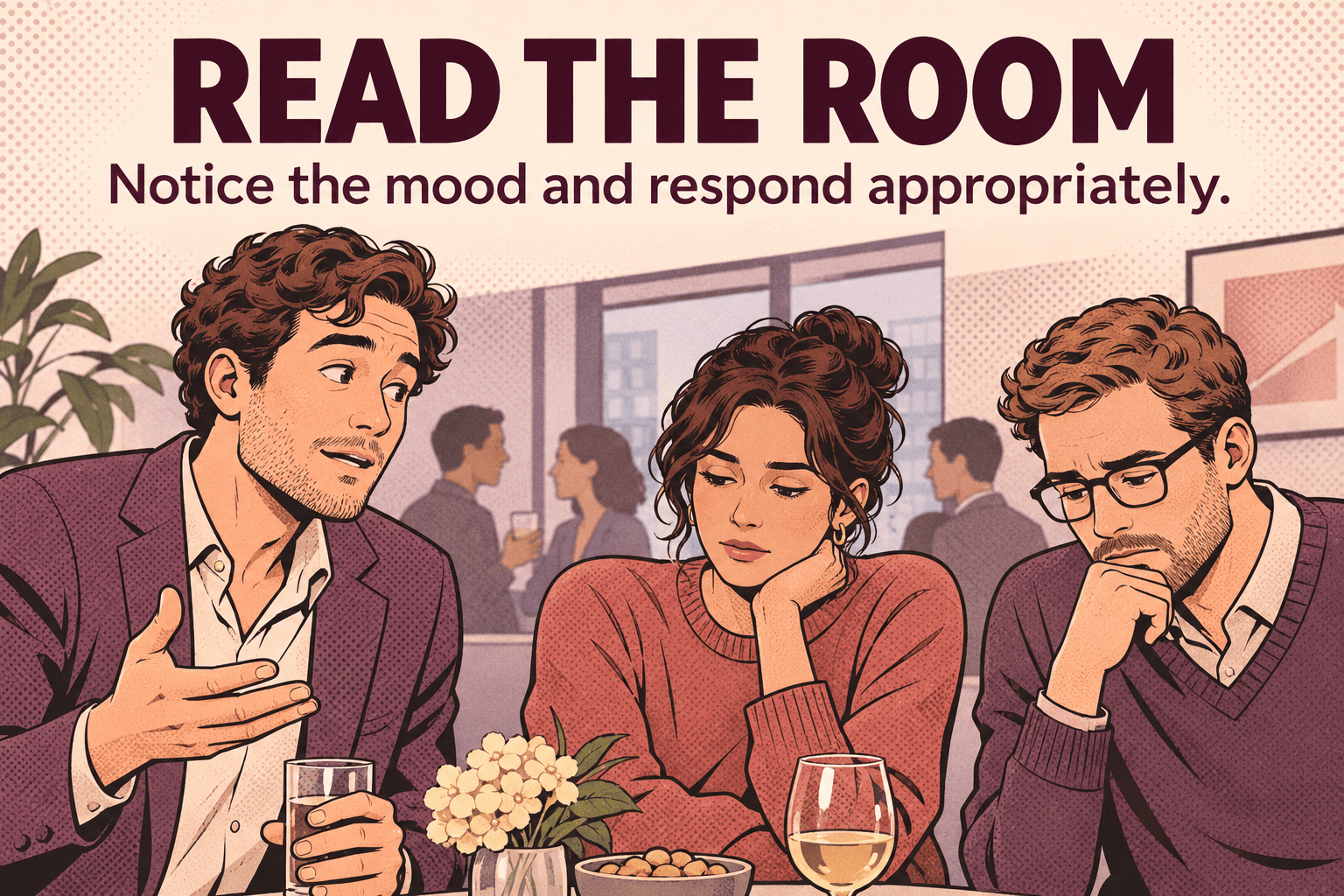
English Idiom – Read the room.
Notice how the people around you are feeling and adjust what you say or do.
At a team lunch, Jamie is about to tell a joke. Then he notices that the usual chatter has stopped. One colleague is staring into her coffee, and another is speaking in a low voice. He puts the joke aside and asks, “Is everything all right?” Jamie has read the room.
The room is the group and its mood. You might notice that people have gone quiet, that a joke has landed badly or that everyone is eager to move on. Those clues help you decide whether to carry on, change tack or ask what’s happening.
Why This Idiom Inspired Our Daily Quiz
This idiom gave us the idea for Read the Room, our daily British English quiz. Learning what an idiom means is one skill. Judging when it would sound funny, friendly or rude is another. A line that makes your best mate laugh might land very differently in a tense meeting. We built the quiz around that moment when you have to decide what fits.

In the first two rounds, pick the idiom that fits the situation. In the third, decide whether you’d actually say a given line to the person involved. You get explanations along the way and a score at the end. A fresh puzzle arrives at midnight UK time.
Play the daily quizPlay Read the RoomTry today’s three roundsFor a closer look at the rounds and scoring, see the Read the Room Game Guide.
How to Use It
She read the room usually describes someone who handled the mood well. He didn’t read the room describes someone who missed it. Read the room! is a direct criticism or warning. With a friend it can be teasing, but in front of colleagues it can be embarrassing. If you want to be gentler, try “Maybe now isn’t the best time.”
Look for a change in tone, pace or who’s participating. A brief silence could mean people are thinking, disagreeing or distracted. If you’re unsure, try asking “How does everyone feel about that?”
Reading the room also helps when someone’s words could mean more than one thing. The Unwritten Rules of British English looks at seven conversational habits and when it’s worth asking what someone means.
The spelling stays the same in the present and past. Say reed in “You need to read the room” and red in “She read the room and changed the subject.”
Examples
At work. “I was going to ask for a decision, but I read the room and gave everyone another day.”
With friends. “They’ve just lost the final. Read the room before you start winding them up.”
On a video call. “She read the room, stopped sharing her slides and asked what the team needed.”
In a group chat. “I nearly posted the meme, then saw what everyone was talking about. I’m glad I read the room.”
Related Idioms and Expressions
Read between the lines is about working out what someone implies. If a colleague says “That might be tricky,” you might read between the lines and hear a polite no. What British Colleagues Really Mean has more examples of indirect language.
If you misjudge the mood and say something embarrassing, you might put your foot in it. If you spot the tension in time and stop yourself from speaking, you might bite your tongue.
If you misunderstand what somebody meant, you may get the wrong end of the stick. If you’re taking the mickey, reading the room helps you tell when the teasing has stopped being funny.
Learn More
Look it upRead the room in Cambridge Dictionary includes a definition and examples of how the phrase is used.Cambridge DictionaryWhat is an idiom?
An idiom is an established expression whose meaning goes beyond the literal meaning of its words. To read the room is to pick up on a group’s mood. The word read works here much as it does in read someone’s expression.
Frequently Asked Questions
It depends on tone. “I tried to read the room” is neutral. Saying “Read the room!” to someone can sound like a public telling-off. A gentler option is “Maybe now isn’t the best time.”
It’s written the same way. In “She read the room and changed the subject,” read sounds like red. In “You need to read the room,” it sounds like reed.
Yes. In a video call or group chat, you can notice that people have gone quiet, are asking urgent questions or have stopped joking. If the reaction is unclear, ask.
Reading between the lines is working out what someone implies. Reading the room is noticing how a group feels and thinking about how to respond.
Test Yourself
Try these four questions on the meaning, pronunciation and everyday use of read the room.
What is FunkyEnglish?
FunkyEnglish helps you learn everyday English through idiom lessons, slang, phrasal verbs and quizzes. The lessons show what expressions mean and how people use them in real conversations.


