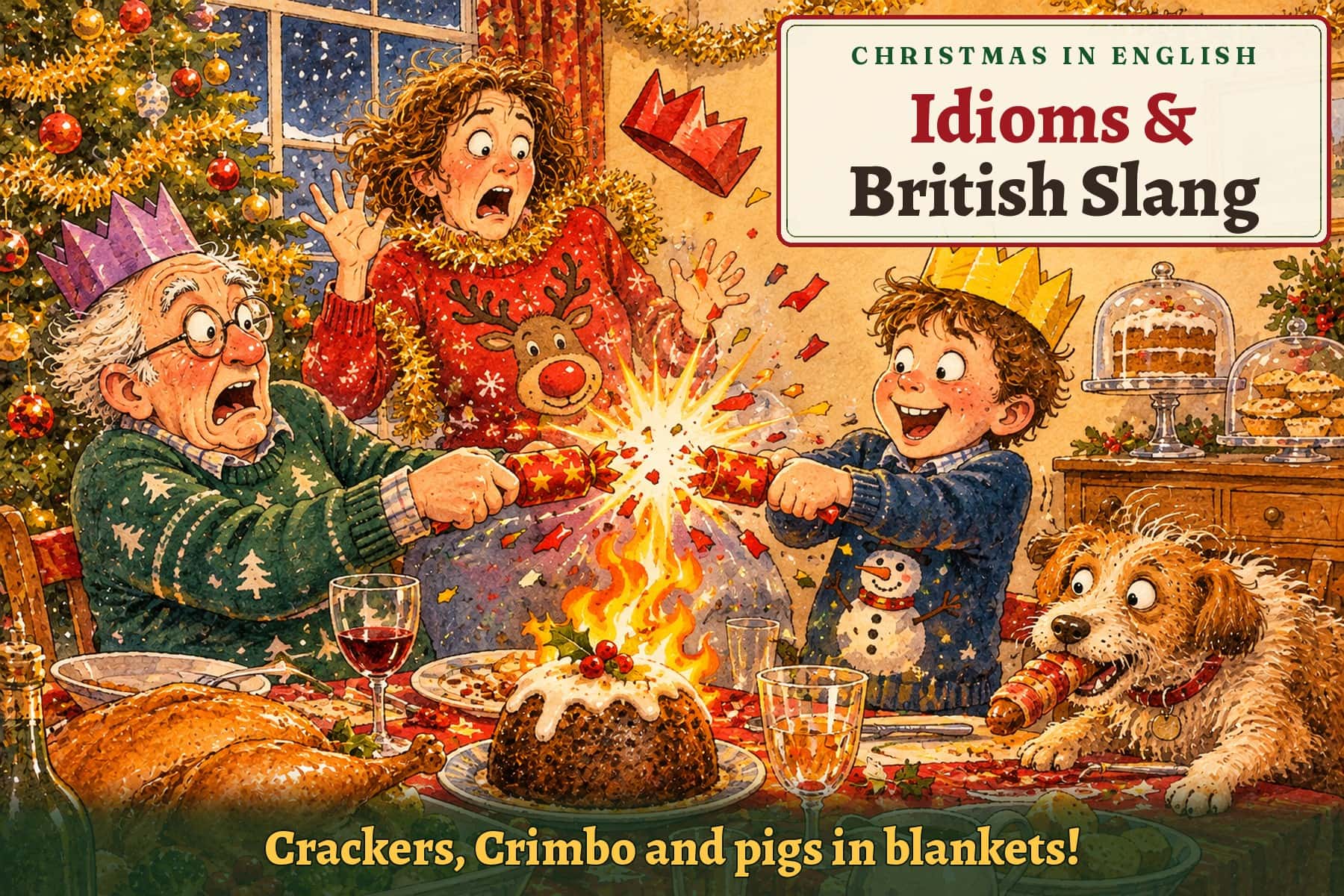
Christmas in Britain means crackers, paper hats, too many mince pies and at least one argument over a board game. It also comes with its own English: idioms you’ll hear all year round, plus festive slang that might confuse even fluent speakers.
Here are ten Christmas idioms, the British Christmas words you need to know, and the biggest differences between a British and an American Christmas. Then test yourself with the quiz at the bottom.
10 Christmas Idioms
1. Christmas has come early
Meaning: something unexpected and very good has happened.
“Free pizza in the office? Christmas has come early!”
2. Christmas comes but once a year
Meaning: it’s a special time, so enjoy yourself (usually said to excuse eating or spending too much).
“Go on, have another mince pie. Christmas comes but once a year!”
This one is old! It comes from a poem by Thomas Tusser, published in 1573.
3. Bah, humbug!
Meaning: a grumpy way to say you don’t like Christmas (or anything fun).
“Christmas songs in October? Bah, humbug!“
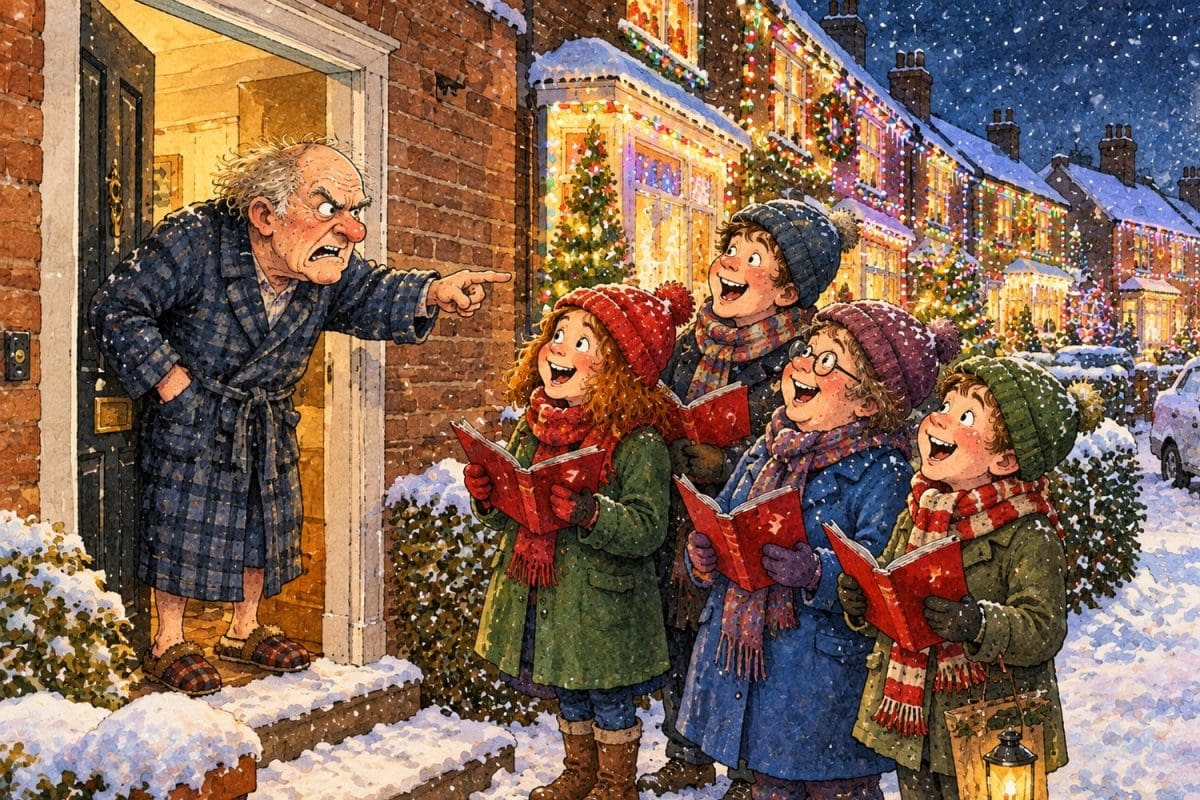
It’s what Ebenezer Scrooge says in Charles Dickens’ A Christmas Carol (1843).
4. A Scrooge
Meaning: a mean person who hates spending money.
“My boss is such a Scrooge. We didn’t even get a Christmas party.”
5. Like turkeys voting for Christmas
Meaning: choosing something that will obviously harm you.
“Asking the team to vote for longer hours? That’s like turkeys voting for Christmas.”
Full lesson: like turkeys voting for Christmas
6. A turkey
Meaning: a film, show or product that is a complete failure.
“Everyone said the new film would be a hit, but it was a real turkey.”
7. Lit up like a Christmas tree
Meaning: covered in bright lights, or very bright and noticeable.
“The whole street is lit up like a Christmas tree this year.”
8. A stocking filler
Meaning: a small, cheap present (Americans say stocking stuffer).
“I bought some fluffy socks as stocking fillers.”
9. Good things come in small packages
Meaning: something small can be very valuable or impressive.
“It’s only a tiny box, but good things come in small packages!”
10. Deck the halls
Meaning: to decorate a place for Christmas (from the famous carol).
“Right, the tree’s up. Time to deck the halls!”
British Christmas Slang and Vocabulary
These are the words you’ll hear in every British home, shop and office in December:
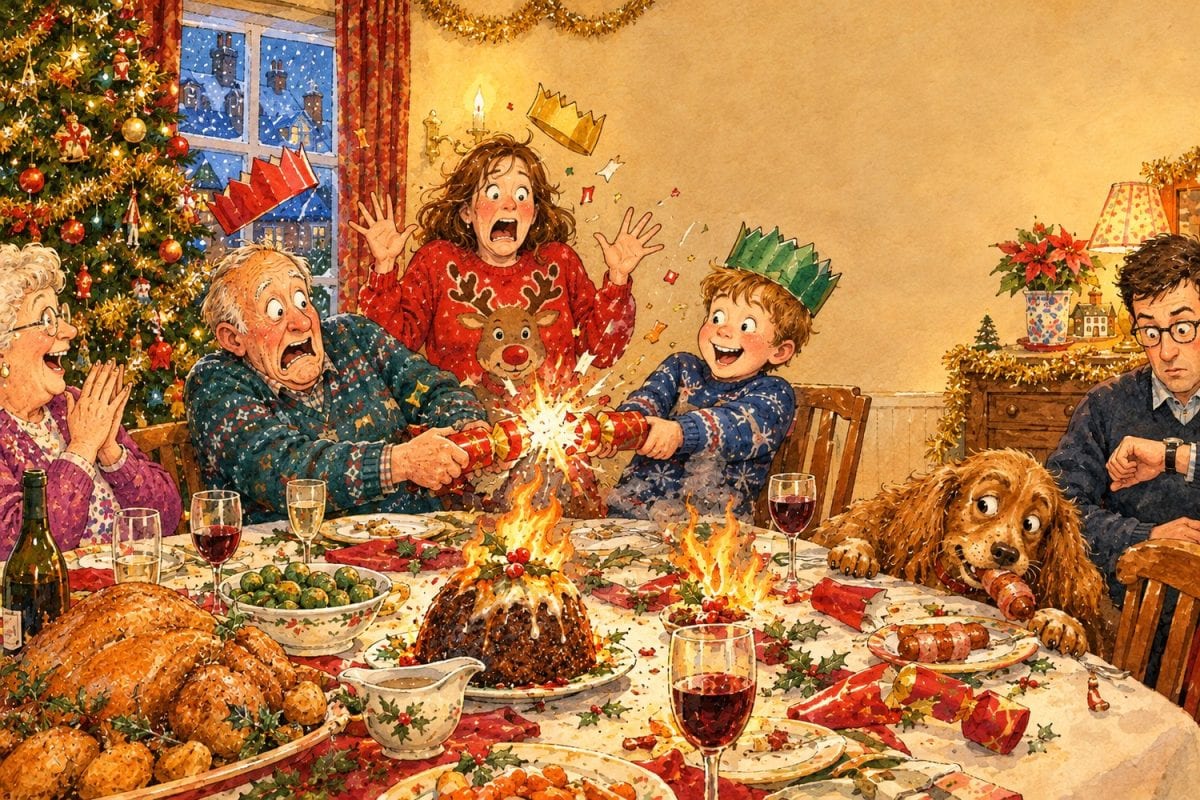
- Crimbo: a jokey, informal word for Christmas. “What are you doing for Crimbo?”
- Christmas do: the office Christmas party. “Are you going to the Christmas do on Friday?”
- Christmas jumper: a (usually terrible) knitted jumper with reindeer or snowmen on it. Many schools and offices hold a Christmas Jumper Day for charity.
- Crackers: paper tubes you pull with another person at Christmas dinner. They go BANG and contain a paper crown, a small toy and a really bad joke.
- Pigs in blankets: small sausages wrapped in bacon. (In the USA, pigs in blankets are sausages in pastry.)
- Mince pies: small sweet pies full of dried fruit and spices. There’s no meat in them today, even though the name says “mince”.
- Christmas pudding: a rich, dark fruit pudding, sometimes set on fire with brandy before it is served.
- Panto: a funny Christmas theatre show for families, where the audience shouts “He’s behind you!” and “Oh no it isn’t!”
- Secret Santa: a gift swap where everyone buys a present for one person, without saying who it’s from.
- Boxing Day: 26 December, a public holiday for sales, football and leftovers.
- Brussels sprouts: small green vegetables that everybody serves and half of Britain refuses to eat.
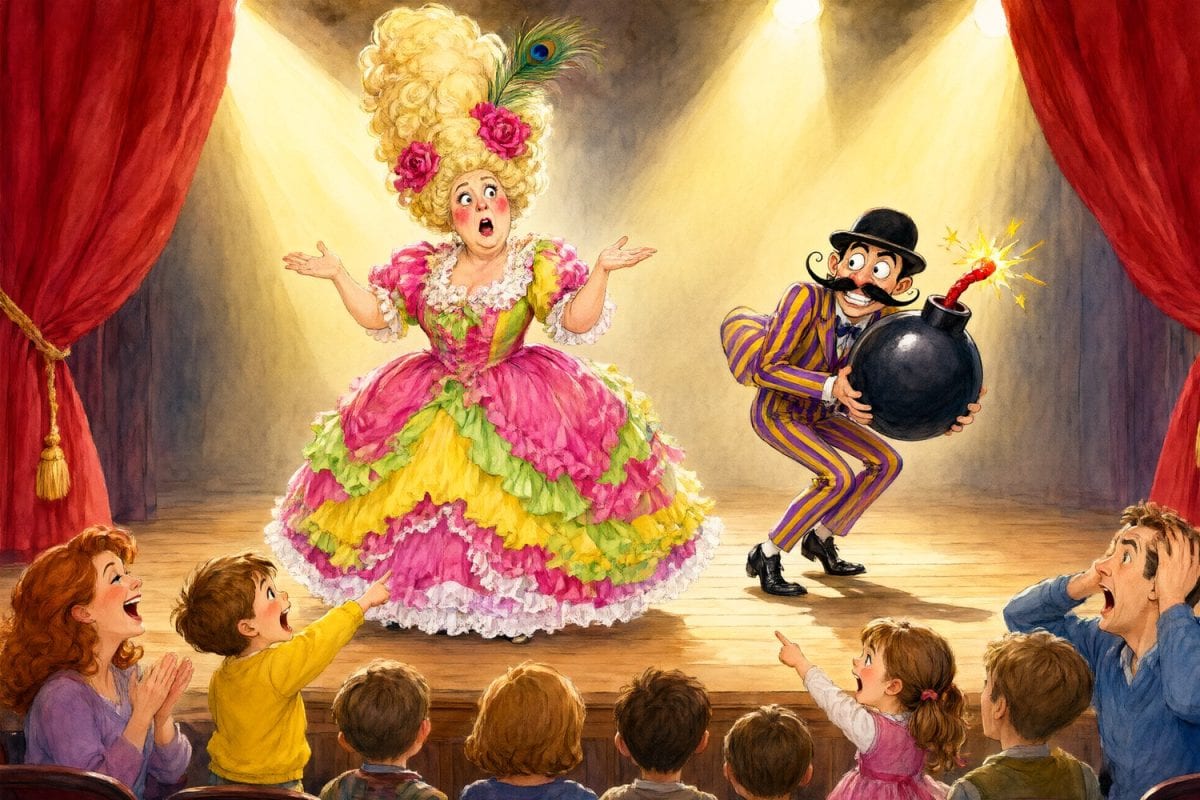
Want more? Try our 50 British slang words, and find out why some people think Christmas jumpers are naff.
British Christmas vs American Christmas
English learners are often surprised by these differences:
| British | American |
|---|---|
| Happy Christmas or Merry Christmas | Merry Christmas |
| Father Christmas or Santa | Santa Claus |
| stocking filler | stocking stuffer |
| pigs in blankets (sausages in bacon) | pigs in a blanket (sausages in pastry) |
| Christmas dinner, usually eaten at lunchtime | Christmas dinner, often eaten in the evening |
| crackers on the table | crackers are rare |
| Boxing Day (26 December) is a holiday | 26 December is a normal working day |
Why “Boxing Day”? The most popular explanation is that it was the day when wealthy families gave “Christmas boxes” of money or gifts to their servants and to tradespeople.
For teachers
Free Christmas lesson pack
Picture vocabulary, Christmas idioms and slang, card messages, what to shout at a panto, a very British Christmas story and a word search, with an answer key. Eight pages, ready to print.
Pop your email in and we’ll send it straight over. No partridge, no pear tree.
Frequently Asked Questions
It means something unexpectedly good has happened, as if you got a present before Christmas.
Crimbo is an informal, jokey British word for Christmas.
The most popular explanation is that 26 December was when people gave “Christmas boxes” of money or gifts to servants and tradespeople.
Test Yourself
More Seasonal English
Want more festive words? See our photo guides to Christmas vocabulary (baubles, tinsel and mistletoe) , Christmas dinner vocabulary (sprouts, gravy and pigs in blankets) and Father Christmas vocabulary (sleighs, reindeer and what to say if you meet him at 2am). Writing cards this year? Here’s what to write in a Christmas card. Off to the theatre? Find out what to shout at a pantomime. (Oh yes you will!) And for Secret Santa, the office party and the tin of chocolates, see Christmas at work. Then, once the presents are open, here’s everything about Boxing Day and New Year.
Celebrating all season? Don’t miss Bonfire Night on 5 November and our spooky Halloween idioms. Off out carol singing? Don’t forget to wrap up warm! And for a festive challenge, try the big English Idioms Quiz.
What is FunkyEnglish?
FunkyEnglish is a website that helps you improve your English. We offer quick lessons that teach idioms, slang, phrasal verbs and more. Visit our homepage to see our latest articles, or use the menu to find specific content!