Learn the English names for the parts of the arm, from the shoulder to the wrist, plus the muscles, the famous “funny bone”, useful phrases for when your arm hurts, and the idioms we use every day.
Parts of the Arm in English
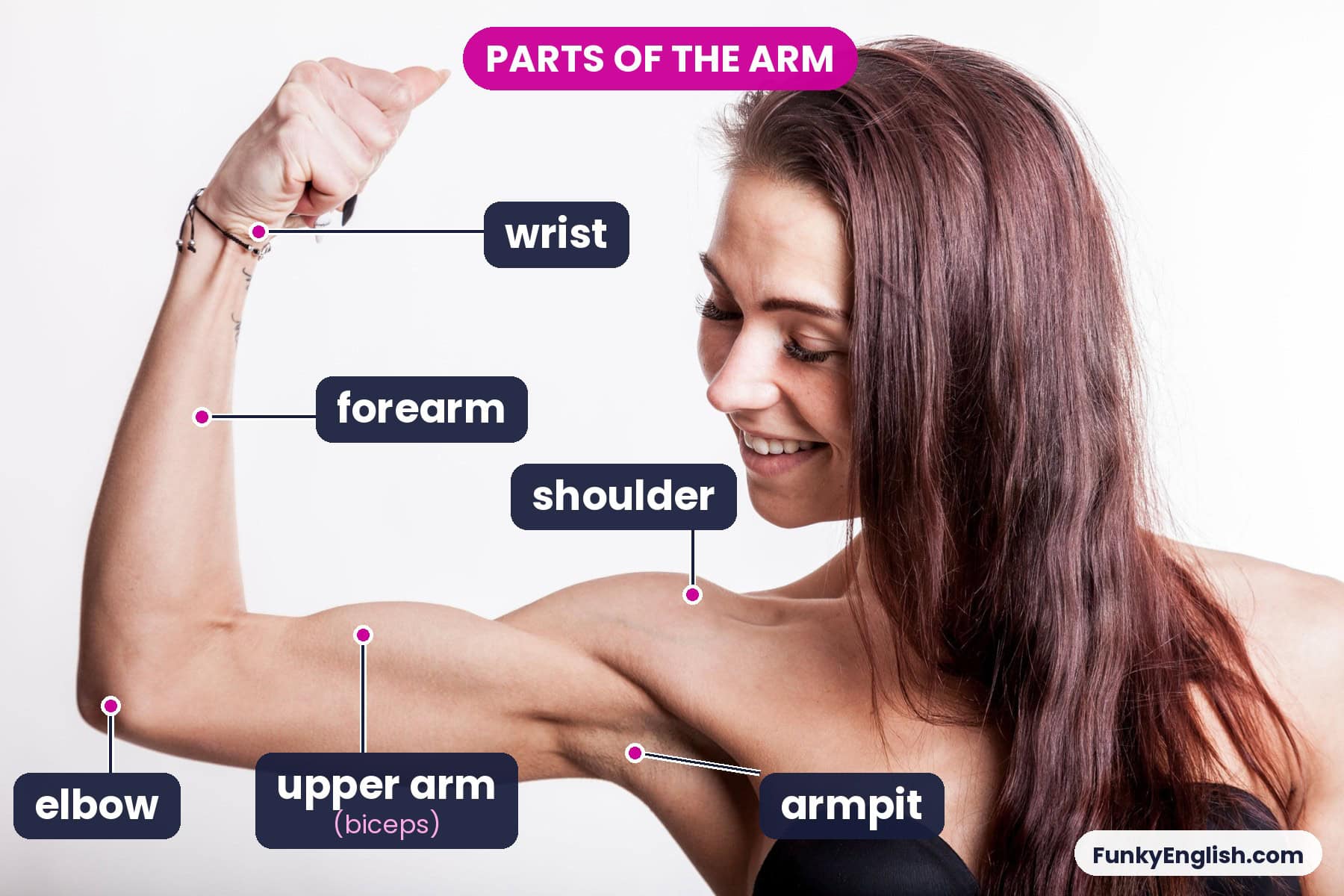
Starting at the top and working down to the hand:
- Shoulder: where your arm joins your body. “She carried her bag over her shoulder.”
- Armpit: the hollow under the top of your arm, where it joins the shoulder.
- Upper arm: the part between your shoulder and your elbow.
- Elbow: the joint in the middle of your arm, where it bends.
- Forearm: the part between your elbow and your wrist. It’s the part of your arm you rest on a desk.
- Wrist: the joint that connects your hand to your arm. You wear a watch on it.
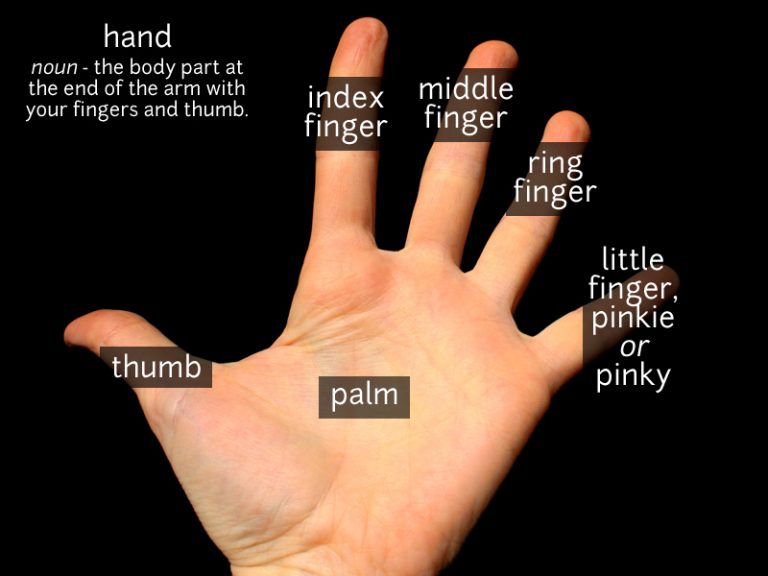
- Hand: at the end of the arm. Learn the names of all five fingers in our hand and fingers vocabulary.
“I fell off my bike, landed on my elbow and scraped my whole forearm.”
Arm Muscles: Biceps and Triceps
- Biceps: the big muscle on the front of your upper arm. It’s the one people show off when they “flex”. “Look at the size of his biceps!”
- Triceps: the muscle on the back of your upper arm. It straightens your arm.
- Shoulder muscle: the round muscle on top of the shoulder. Its medical name is the deltoid, but gym fans just call them delts.
Biceps or bicep? In dictionaries, biceps is the correct word for one muscle as well as two: “one biceps, two biceps”. In everyday speech, though, most people say bicep for one. You’ll hear both. The same goes for triceps.
The Funny Bone (It Isn’t a Bone!)
Hit the back of your elbow on a table and you’ll feel a strange, tingling, buzzing pain all the way down your arm. In English, we say you’ve hit your funny bone.
But it isn’t a bone at all. It’s a nerve (the ulnar nerve) that passes very close to the skin at the elbow. And it definitely isn’t funny. A popular explanation for the name is a joke: the bone in your upper arm is called the humerus, which sounds like humorous. Nobody knows for sure if that’s the real origin, but it’s the one teachers like best.
“Ow! I just hit my funny bone on the door. Stop laughing!”
Talking About Arm Problems
Useful phrases for the doctor, the gym or the playground:
- Pins and needles: a prickly, tingling feeling, often after you’ve slept or leaned on your arm. “I’ve got pins and needles in my arm.”
- My arm’s gone dead: it feels numb and heavy. In British English, a dead arm is also what you get when a friend (or sibling) punches you hard on the upper arm. Not recommended.
- Sprain: to hurt a joint by twisting it. “I sprained my wrist playing volleyball.”
- Pull a muscle: to hurt a muscle by stretching it too far. “I pulled a muscle in my shoulder at the gym.”
- Tennis elbow: pain on the outside of the elbow, from using your arm too much. You don’t have to play tennis to get it.
- Plaster cast (UK) / cast (US): the hard cover that holds a broken bone still. Friends traditionally write messages on it.
- Sling: a piece of cloth that goes around your neck to support an injured arm.
For more health English, see our doctor vocabulary and nurse vocabulary.
Arm and Elbow Idioms
- cost an arm and a leg: be very expensive. “That new phone cost an arm and a leg.”
- twist someone’s arm: persuade someone to do something. Often used as a joke when you’re easy to persuade: “Another slice of cake? Oh, go on, twist my arm.”
- chance your arm (British): try something, even though you might fail. “The job’s a long shot, but I’ll chance my arm.”
- up in arms: very angry and protesting about something. “Parents are up in arms about the new school hours.”
- with open arms: in a very warm, friendly way. “My new team welcomed me with open arms.”
- keep someone at arm’s length: avoid getting too close or friendly with someone.
- a shot in the arm: something that gives new energy or encouragement. “The new café has been a real shot in the arm for the high street.”
- elbow grease: hard physical work, especially cleaning. “These pans just need a bit of elbow grease.”
- elbow room: enough space to move around comfortably.
Related Vocabulary
Keep going around the body: hand and fingers (thumb, index finger and more), foot and toes, parts of the face and eye vocabulary. Feeling strong? Try our arm wrestling vocabulary.
Learning the whole body? See all eight labelled picture guides, from face to feet, on our Parts of the Body in English page.
Free: 8 Parts of the Body posters
Get all 8 of our labelled Parts of the Body posters (face, eyes, ears, mouth and teeth, arm, hand, leg and foot) in one printable PDF. Perfect for the classroom wall. Pop your email in below and we’ll send it straight over.
Frequently Asked Questions
From top to bottom: the shoulder, armpit, upper arm, elbow, forearm and wrist, with the hand at the end. The main muscles are the biceps (front of the upper arm) and the triceps (back of the upper arm).
In dictionaries, biceps is the correct form for one muscle and for two. In everyday speech, many people say bicep for one, so you will hear both.
The funny bone is actually a nerve near the elbow that tingles when you hit it. A popular explanation is a pun: the upper arm bone is called the humerus, which sounds like humorous.
Test Yourself
Quick Check
What is FunkyEnglish?
FunkyEnglish is a website that helps you improve your English. We offer quick lessons that teach idioms, slang, phrasal verbs and more. Visit our homepage to see our latest articles, or use the menu to find specific content!