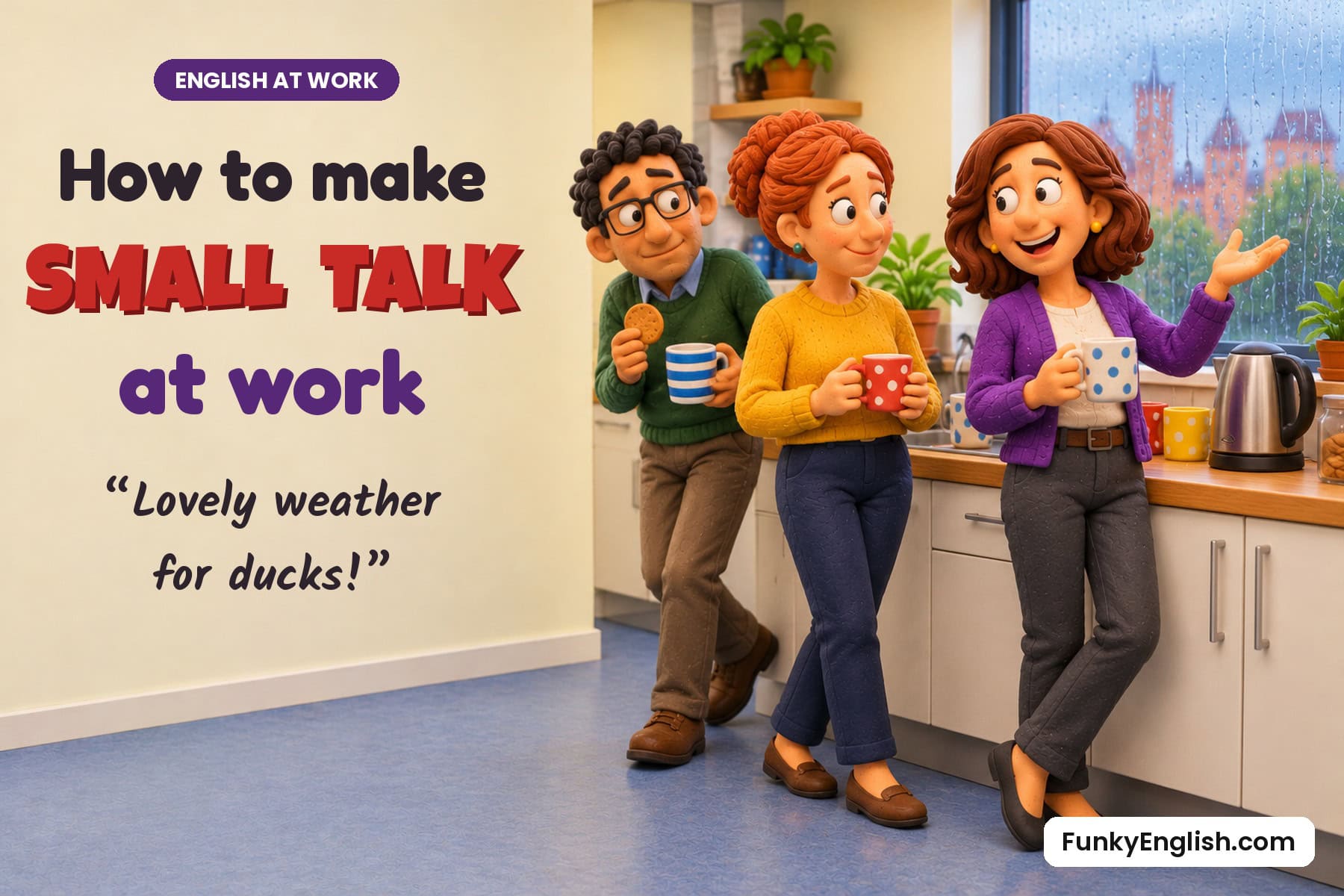
It’s Monday morning. You’re waiting for the kettle to boil, it’s pouring with rain outside, and a colleague you barely know is standing next to you. Silence. Somebody has to say something. Welcome to small talk, the short, friendly chat that keeps British offices running (along with tea and biscuits).
What Is Small Talk?
Small talk is a short, light conversation about safe, everyday topics. It isn’t about sharing big news. It’s about being friendly and showing people you’re nice to work with. Five minutes by the kettle can do more for your career than you’d think.
Safe Topics (and Ones to Avoid)
Safe: the weather, the weekend, holidays, travel to work, food, TV and films, and the eternal question of whose turn it is to make the tea.
Best avoided: salary, politics, religion, someone’s age or weight, and anything you wouldn’t want repeated at the next team meeting.
Starting a Conversation
- “Morning! Good weekend?”
- “Did you get caught in the rain?”
- “Busy day today?”
- “The kettle’s just boiled. Fancy a tea?”
- “Any plans for the weekend?”
Keeping It Going
The secret is simple: ask a follow-up question and show interest.
- “Oh really? Where did you go?”
- “That sounds lovely.”
- “How did it go?”
- “Me too! I was soaked.”
Answering “How Are You?”
At work, “How are you?” is a greeting, not a real question. Keep your answer short and throw it back:
- “Not bad, thanks. You?”
- “Fine, thanks. How about you?”
- “Can’t complain.”
- “Mustn’t grumble.”
Save the details of your back problems for your friends.
Ending the Conversation Politely
Small talk should be small. When it’s time to go, try:
- “Right, I’d better get back to it.”
- “Anyway, I’ll let you get on.”
- “Nice chatting to you!”
- “Catch you later.”
The British and the Weather
If you only learn one small-talk topic for Britain, make it the weather. It’s always changing, everyone has an opinion and it’s completely safe. Some favourites:
- “Lovely weather for ducks!” It’s pouring with rain.
- “It’s a bit nippy today.” It’s cold.
- “Turned out nice again!” The sun has come out, briefly.
- “Typical! I left my brolly at home.” It’s raining, obviously. (A brolly is an umbrella.)
For more rainy-day words, see our rain vocabulary lesson.
Say This, Not That
| Awkward | Friendly |
|---|---|
| How much do you earn? | How’s the new job going? |
| You look tired. | Busy week? |
| Why are you late? | Did the train let you down again? |
| Who did you vote for? | Any plans for the weekend? |
| (Awkward silence) | The kettle’s just boiled. Fancy a cuppa? |
What British People Really Mean
British small talk has its own secret code:
- “Not bad.” Actually quite good.
- “Can’t complain.” I could, but I won’t.
- “We must have lunch sometime!” We won’t.
- “Anyway…” I’d like to leave now.
- “Right then!” This conversation is over.
More English at Work
This lesson is part of our English at Work series. Next, learn what British colleagues really mean, how to start and end an email, how to apologise at work, how to follow up politely, how to ask for help politely, how to say no politely and how to disagree politely. For the full meaning of small talk, see the Cambridge Dictionary.
Frequently Asked Questions
The weather, the weekend, holidays, travel to work, food, and TV or films are all safe. Avoid salary, politics, religion and personal questions about age or weight.
Use a friendly closing line: “Right, I’d better get back to it” or “Anyway, I’ll let you get on. Nice chatting to you!”
Keep it short and positive, then ask back: “Not bad, thanks. You?” At work it’s a greeting, not a request for news.
Test Yourself
Quick Check
What is FunkyEnglish?
FunkyEnglish is a website that helps you improve your English. We offer quick lessons that teach idioms, slang, phrasal verbs and more. Visit our homepage to see our latest articles, or use the menu to find specific content!