English Idiom – Get the wrong end of the stick.
To misunderstand what someone says or what a situation means.
I told Nan I was taking the day off. By lunchtime she’d told everyone I’d quit my job. She’d got the wrong end of the stick.
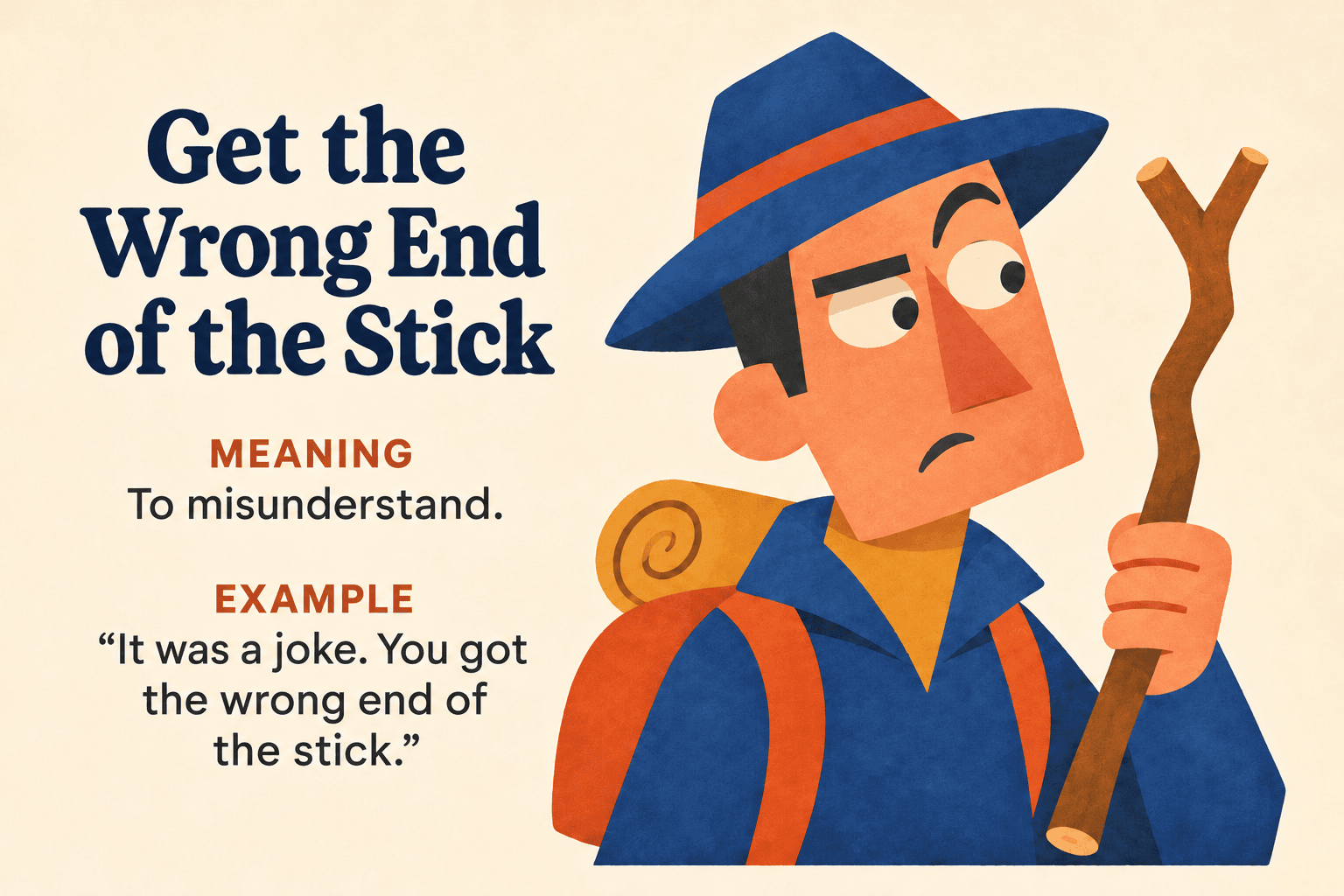
The hiker in the picture is holding the stick by its awkward, forked end. Nan did something similar with my news. She heard what I said and came away with a completely different story.
This informal British idiom is handy when someone hears part of a story, misses a joke or reads a message the wrong way. If a friend texts “I’m done”, for example, they might mean they’ve finished their homework. It’s worth asking before you assume they’re upset.
Similar British Expressions
Put your foot in it is about saying something embarrassing or tactless. You might get the wrong end of the stick first and then put your foot in it by saying what you think happened.
If someone is pulling your leg, they’re trying to fool you for a laugh. Taking the mickey often means teasing someone. Getting the wrong end of the stick describes the misunderstanding itself.
You can get the wrong end of the stick by misunderstanding a message. To read the room, pay attention to the group’s mood and let that guide what you say next.
How to Use It
Use get the wrong end of the stick when it happens, or got the wrong end of the stick when you’re telling the story afterwards. The wording stays the same whether you misunderstood a message, a joke or a whole conversation.
If you misunderstood, “Sorry, I got the wrong end of the stick” is an easy way to clear things up. “You’ve got the wrong end of the stick” can sound a little blunt, especially at work. Try “I think there’s been a misunderstanding” if you want to sound gentler.
Examples
“It was a joke. You got the wrong end of the stick.”
“When you said Friday was free, I thought you meant the tickets were free. I got the wrong end of the stick.”
“Maya heard ‘we’re moving the meeting’ and turned up in another room. We’d changed the time. She’d got the wrong end of the stick.”
British vs American English
In Britain, you might hear “Sorry, I got the wrong end of the stick.” In American English, “Sorry, I got the wrong idea” is a natural way to say the same thing. “I misunderstood” works in both varieties, including in a more formal situation.
Learn More
Look it upGet the wrong end of the stick – Cambridge DictionaryCambridge DictionaryTo practise picking up on tone and indirect meanings, try What British Colleagues Really Mean.
What is an idiom?
An idiom is a phrase with a meaning of its own. If you get the wrong end of the stick, you’ve misunderstood something. The stick is just a picture to help you remember the phrase.
Frequently Asked Questions
It’s informal. Saying “I got the wrong end of the stick” is an easy way to own a mix-up. Saying “you got the wrong end of the stick” can sound blunt, depending on your tone.
Yes. Use got to describe a misunderstanding that already happened. For example, “I got the wrong end of the stick when I read your text.”
Test Yourself
Four quick questions. See if you’ve got the right idea.
Keep practising. Play Read the Room to choose the right expression for the situation.