English Idiom – Get the hump.
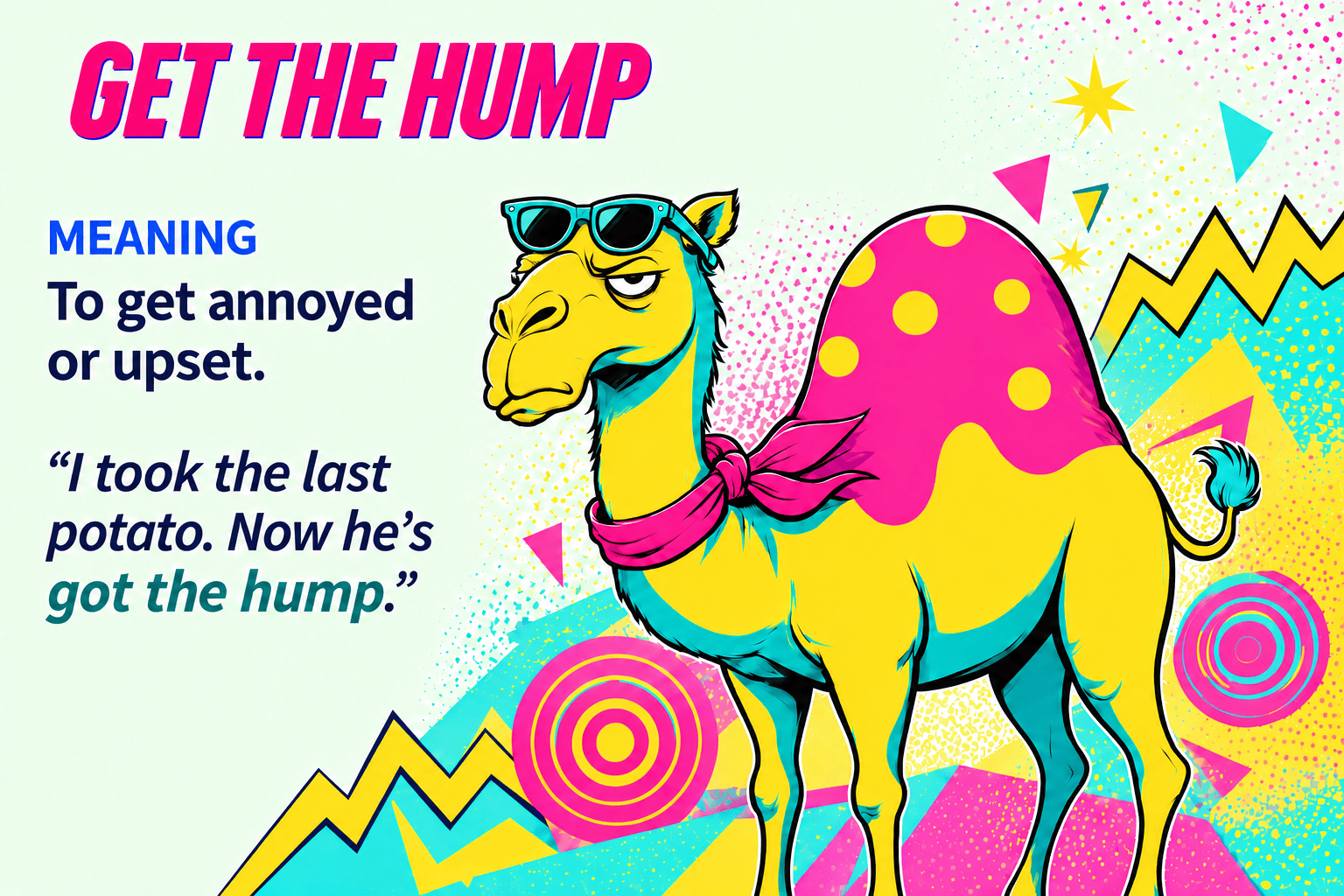
To become annoyed or upset, often because you feel someone has treated you unfairly.
At Sunday lunch, I took the last roast potato. My brother looked at the empty dish and said, “No, go on. I didn’t want it anyway.” He barely spoke to me for the rest of the meal. He’d got the hump.
Picture a sulky camel refusing to budge. That’s the energy.
It’s informal British English. You might use it when a small thing puts someone in a bad mood, or when someone takes offence at something you said. In the Sunday lunch example, my brother’s reaction tells you more than his words do.
Similar British Expressions
Be miffed suggests mild annoyance. “I was a bit miffed that nobody saved me a seat.” Be in a huff often suggests that the person is showing their annoyance by going quiet or walking off.
Take the biscuit is a verdict on what someone did. You could say, “Taking the last potato and asking for seconds takes the biscuit.” If your brother gets the hump, you’re describing his reaction.
How to Use It
Use get the hump with someone to name the person you’re annoyed with, or get the hump about something to name the reason. Get marks the change in mood. Have the hump or have got the hump describes how someone feels now.
You can also say something gives you the hump. “It gives me the hump when people leave their bags on the only spare seat.” Here, the thing that annoys you is the subject of the sentence.
Tone. “My brother’s got the hump with me” can sound light-hearted when you’re telling a friend. Asking an upset colleague “Have you got the hump?” can sound dismissive. If you think you’ve upset them, try “Did I upset you?”
Examples
“Maya got the hump with me because I watched the next episode without her.”
“Dan got the hump about being left out of the group photo.”
“He’s still got the hump. Apparently, you’re supposed to let the birthday boy win.”
“It gives me the hump when someone says they’re five minutes away and they haven’t even left.”
British vs American English
Get annoyed and get upset work on either side of the Atlantic. In casual American English, you might also hear get ticked off. “She got ticked off when we started without her” gives the same basic idea.
Where Does It Come From?
An 1890 glossary of Gloucestershire dialect records got the hump for someone who was out of temper. The glossary also gives the physical sense of hump as a lump or hunch. It shows the expression was already in use by 1890, though its exact origin is uncertain.
Learn More
Look it upGet the hump – Collins English Dictionarycollinsdictionary.comCompare it with Take the Biscuit, another British idiom you might hear when someone’s annoyed. If someone has got the hump with you, you might be in their black books.
What is an idiom?
An idiom is a phrase whose meaning you can’t work out just from the individual words. Learning it in a situation helps you remember when to use it.
Frequently Asked Questions
They describe the same feeling at different points. You get the hump when you become annoyed, and you have the hump while you’re still annoyed.
It’s informal. It can sound jokey with friends, but telling someone they’ve got the hump can make their complaint sound silly.
Test Yourself
What is FunkyEnglish?
FunkyEnglish offers free lessons on idioms, slang and phrasal verbs.