
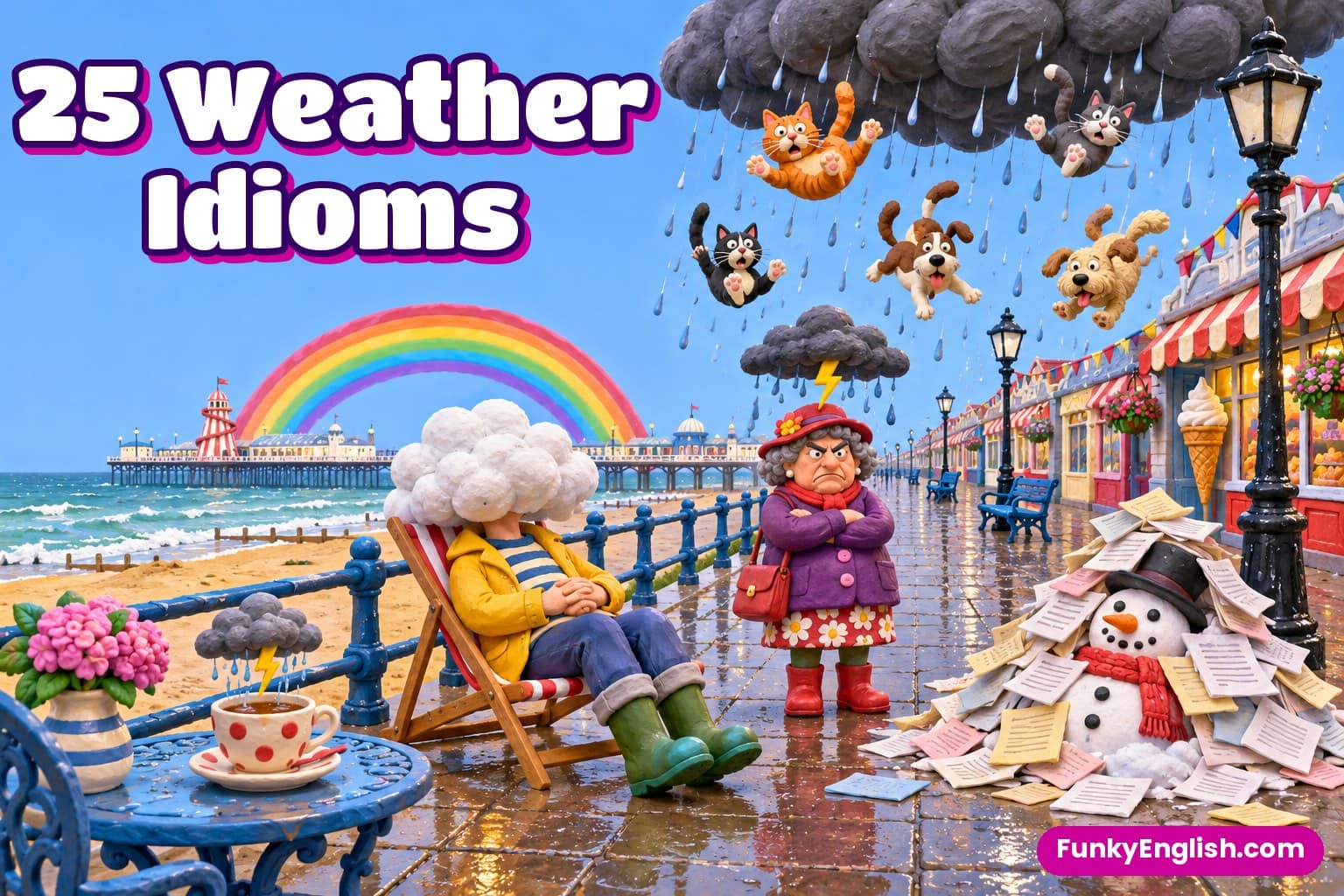
Here are 25 common weather idioms in English, each with its meaning and an example. In Britain we talk about the weather constantly, so it was only a matter of time before it crept into how we talk about everything else: feeling ill, being busy, losing your temper, and the friend who vanishes the day you move house.
The first 12 have full lessons with pictures, more examples and a quiz. The other 13 are further down with a meaning and an example each. You may want a coat.
12 Weather Idioms with Full Lessons
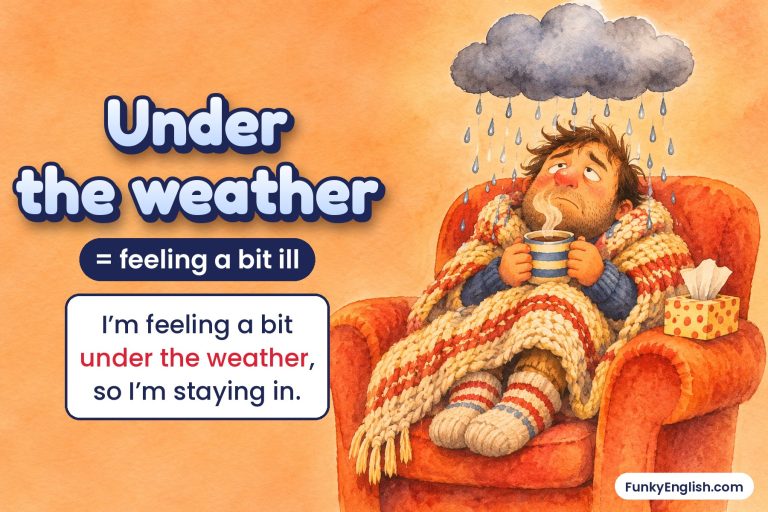 Under the Weatherfeeling a bit ill
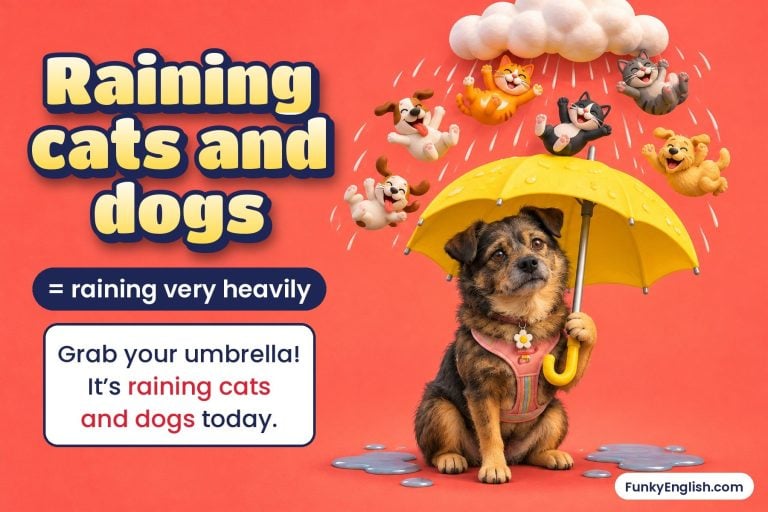 Raining Cats and Dogsraining very heavily
 Right as Rainwell again after being ill
 A Storm in a Teacupa big fuss about nothing
 Take a Rain Checksay no now, maybe later
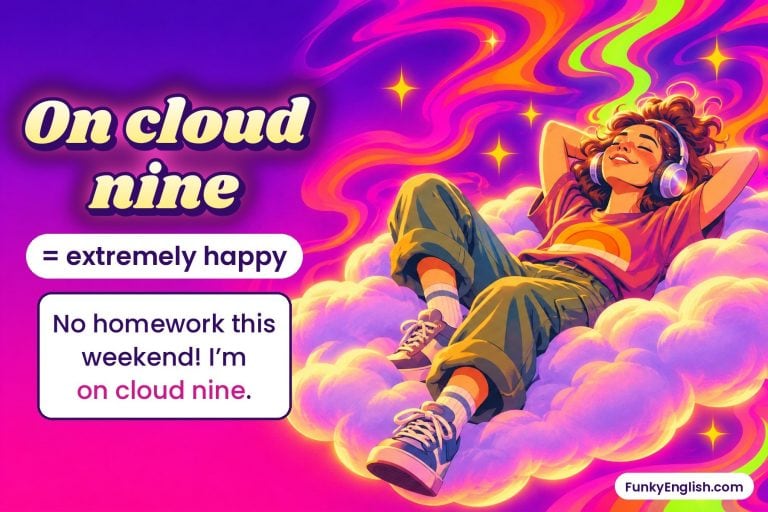 On Cloud Nineextremely happy
 Up in the Airnot decided yet
 Break the Iceget people relaxed and talking
 On Thin Icein a risky position
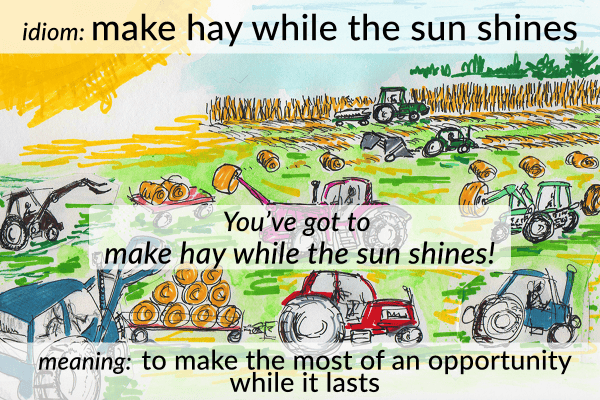 Make Hay While the Sun Shinesuse a chance while you have it
 Chase Rainbowstry for something impossible
 Shoot the Breezechat about nothing much
13 More Weather Idioms
Rain, sun, storms, snow and one very cold monkey. These are all in everyday use, so you will hear them in shops, offices and staffrooms all over the UK.
Every Cloud Has a Silver Lining
Meaning: something good can come out of a bad situation.
“I missed the last bus, but every cloud has a silver lining: I found a fiver at the bus stop.”
It Never Rains but It Pours
Meaning: when one bad thing happens, more bad things usually follow. This is the British version. Americans say when it rains, it pours.
“First the boiler broke, then the car. It never rains but it pours.”
Come Rain or Shine
Meaning: whatever happens, whatever the weather.
“Lobster expects his morning walk, come rain or shine.”
Steal Someone’s Thunder
Meaning: take the attention or praise that someone else should get.
“My brother stole my thunder by announcing his engagement at my birthday party.”
A Face Like Thunder
Meaning: a very angry expression.
“Who’s upset the head teacher? She’s had a face like thunder since assembly.”
The Calm Before the Storm
Meaning: a quiet period just before something difficult or busy happens.
“The staffroom is peaceful today. Exam results come out tomorrow, so I suspect it’s the calm before the storm.”
Weather the Storm
Meaning: get through a difficult time without serious damage.
“Will the little café weather the storm now a big chain has opened next door?”
A Fair-weather Friend
Meaning: someone who is your friend only when things are going well.
“When I needed help moving house, I found out who my fair-weather friends were.”
Snowed Under
Meaning: have far too much work to do.
“Sorry I didn’t reply. I’ve been snowed under with marking all week.”
Have Your Head in the Clouds
Meaning: not pay attention to what is happening, or have ideas that are not realistic.
“Stop daydreaming. You’ve had your head in the clouds since lunch.”
A Ray of Sunshine
Meaning: a person who makes other people feel happier.
“Our new receptionist is a ray of sunshine. Even on Mondays.”
Take Something by Storm
Meaning: become very popular or successful very quickly.
“Her first novel took the country by storm.”
Brass Monkeys
Meaning: very cold. It’s informal and very British, short for brass monkey weather.
“Wear a proper coat. It’s brass monkeys out there.”
And no, it has nothing to do with cannonballs on ships, whatever your uncle says. World Wide Words explains why that story doesn’t hold water.
Weather Idioms Quiz
Five quick questions. No umbrella needed.
Quick Check
Weather Idioms FAQs
Under the weather, raining cats and dogs, every cloud has a silver lining, a storm in a teacup and on cloud nine are some of the most common. Under the weather is probably the one you will hear most, usually from someone phoning in sick.
British weather changes so often that it is the nation’s favourite topic of conversation, and for centuries sailors and farmers lived or died by it. Their weather words slowly turned into everyday expressions for moods, luck and problems.
It is the traditional British version. Americans usually say “when it rains, it pours”. Both mean that bad things tend to arrive together.
What is FunkyEnglish?
FunkyEnglish is a website that helps you improve your English. We offer quick lessons that teach idioms, slang, phrasal verbs and more. Visit our homepage to see our latest articles, or use the menu to find specific content!
