“Write about your plans for the future.” Lovely homework, if you know what you want to do with your life. If you don’t, relax: neither do most adults, including (probably) many of your teachers. The grammar is the easy part. Use going to for plans you’ve already made, and will for predictions and hopes. Here are model answers for both.
10 Sentences About My Future Plans (Going To)
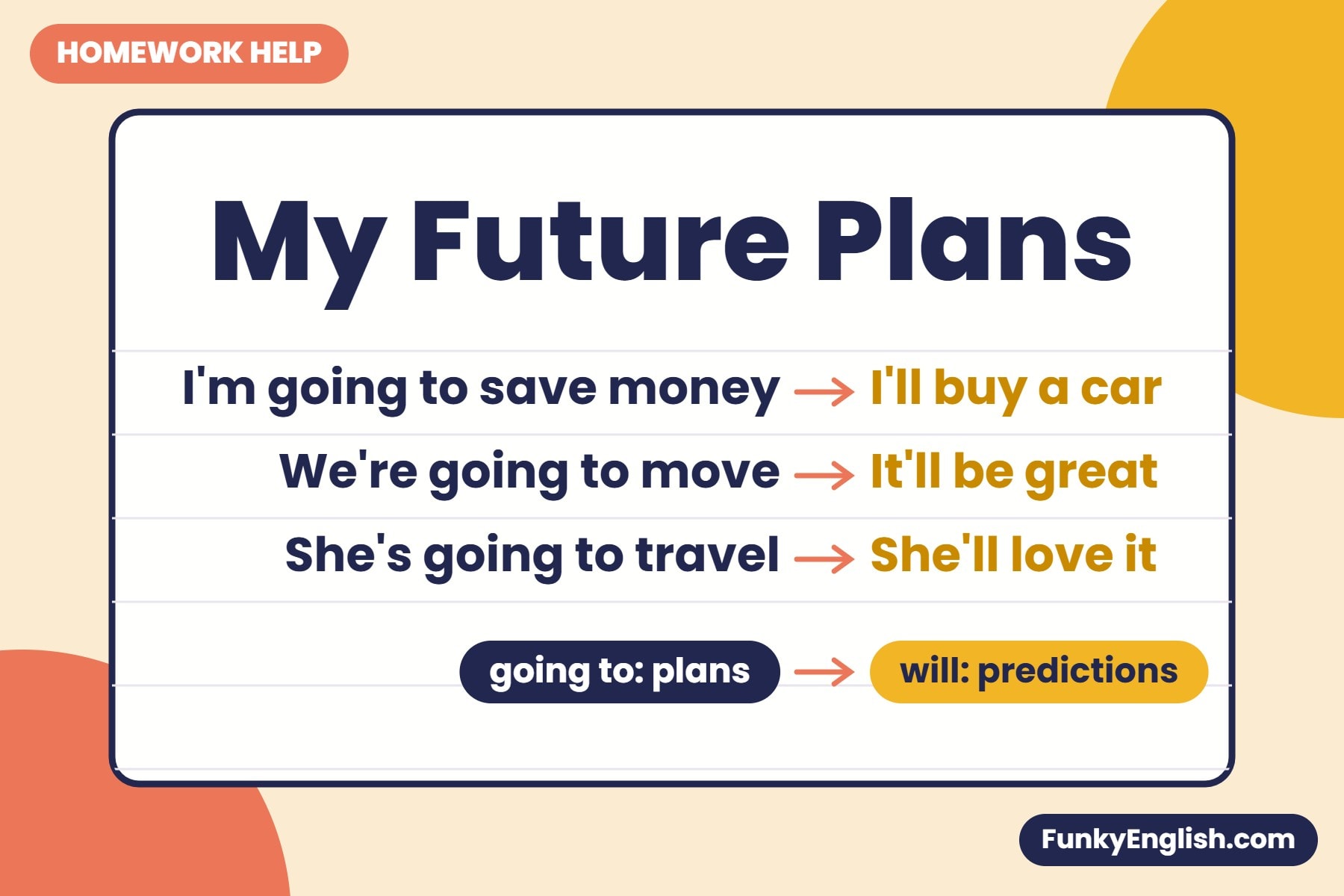
We use going to for plans and intentions: things we decided before we started speaking. The form is am / is / are + going to + verb.
- After school, I‘m going to study computer science.
- Next summer, I‘m going to get a part-time job.
- I‘m going to save money for a car.
- I‘m going to learn to drive when I’m seventeen.
- My best friend and I are going to travel around Europe.
- We‘re going to stay in cheap hostels.
- I‘m going to practise my English every day.
- One day, I‘m going to live in a big city.
- My parents are going to visit me there.
- I‘m not going to eat instant noodles every night.
The Same Ideas with Will (Predictions)
We use will for predictions, hopes and what we think about the future. Words like I think, I hope and probably often come with it. Notice that sentence 10 has changed its mind.
- I think computer science will be useful.
- The job will probably be boring, but the money will help.
- I‘ll buy a car in about two years.
- I hope I‘ll pass my driving test first time.
- Europe will be amazing.
- The hostels won’t be very comfortable.
- My English will get better and better.
- I‘ll probably miss my family.
- My mum will bring food. Lots and lots of food.
- I‘ll probably eat instant noodles every night.
Plans and Predictions Side by Side
| Plan (going to) | Prediction (will) |
|---|---|
| After school, I‘m going to study computer science. | I think computer science will be useful. |
| Next summer, I‘m going to get a part-time job. | The job will probably be boring, but the money will help. |
| I‘m going to save money for a car. | I‘ll buy a car in about two years. |
| I‘m going to learn to drive when I’m seventeen. | I hope I‘ll pass my driving test first time. |
| My best friend and I are going to travel around Europe. | Europe will be amazing. |
| We‘re going to stay in cheap hostels. | The hostels won’t be very comfortable. |
| I‘m going to practise my English every day. | My English will get better and better. |
| One day, I‘m going to live in a big city. | I‘ll probably miss my family. |
| My parents are going to visit me there. | My mum will bring food. Lots and lots of food. |
| I‘m not going to eat instant noodles every night. | I‘ll probably eat instant noodles every night. |
My Future Plans: Paragraph Example
When I leave school, I‘m going to study computer science, because I think it‘ll be useful. Before that, I‘m going to get a part-time job next summer. It‘ll probably be boring, but I‘m going to save money for a car. I hope I‘ll pass my driving test first time. After that, my best friend and I are going to travel around Europe. The hostels won’t be very comfortable, but I‘m sure it‘ll be amazing. One day, I‘m going to live in a big city. My parents are going to visit me, and my mum will definitely bring food.
Mixing both forms shows your teacher you know the difference, which is exactly what this homework is testing.
Going To or Will? The Rules
- Going to: plans you made before speaking. I’m going to study law. (You decided last year.)
- Will: predictions, hopes and opinions. I think it will be hard. I hope I’ll pass.
- Will: decisions made right now. The phone’s ringing. I’ll get it!
- Going to: predictions with evidence you can see. Look at those clouds. It’s going to rain.
- Don’t forget be. I’m going to travel, not I going to travel. And never I will to go or I will going to.
- Negatives: I’m not going to … / I won’t … (won’t = will not).
If you like the history of grammar, Wikipedia has a surprisingly interesting article on the going-to future, which has been around since the 1400s (going-to – not Wikipedia’s article).
Now Write Your Own
Copy these sentence starters and finish them with your own plans:
- When I leave school, I’m going to …
- Next year, I’m going to …
- I think I’ll …
- I hope I’ll …
- In ten years, I’ll probably …
Use going to for the first two and will for the rest. For more on the future, see our English tenses page, or go back in time with My School Day.
More Homework Help
Got another one of these to write? We’ve done the same for other homework classics:
- My School Day (present simple and past simple)
- My Weekend (present simple and past simple)
- Yesterday’s Routine (my daily routine in the past simple)
- My Holiday (past simple questions and answers)
- My Family (have and have got)
- My Best Friend (present simple with he and she)
- Describe Your House (there is and there are)
- My Town (there is, there are, some and any)
- My Favourite Food (a, an and some)
- My Hobby (like and enjoy + -ing)
Frequently Asked Questions
Use going to for plans and intentions you decided before speaking: I’m going to study medicine. Use will for predictions, hopes and decisions made at the moment of speaking: I think it will rain, I’ll help you.
Start with your plans using going to (After school, I’m going to …), then add predictions and hopes with will (I think it’ll be …, I hope I’ll …). Link your ideas with words like before that, after that and one day.
No. Use either will or going to, not both: I will travel or I’m going to travel. Remember the verb be with going to: I am going to, she is going to.
Test Yourself
Quick Check
What is FunkyEnglish?
FunkyEnglish is a website that helps you improve your English. We offer quick lessons that teach idioms, slang, phrasal verbs and more. Visit our homepage to see our latest articles, or use the menu to find specific content!