English Idiom – Not my cup of tea.
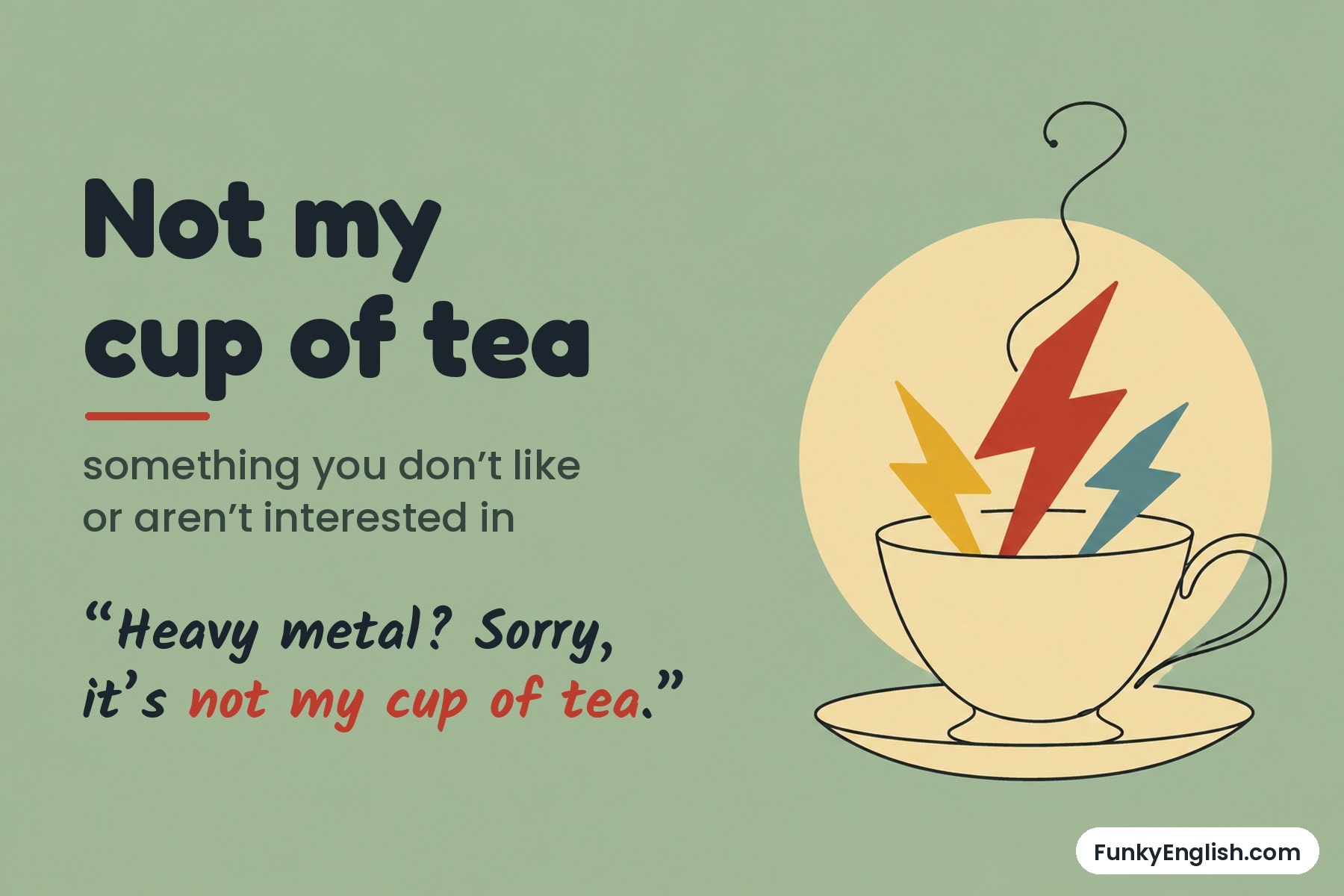
Something you don’t like, or aren’t interested in.
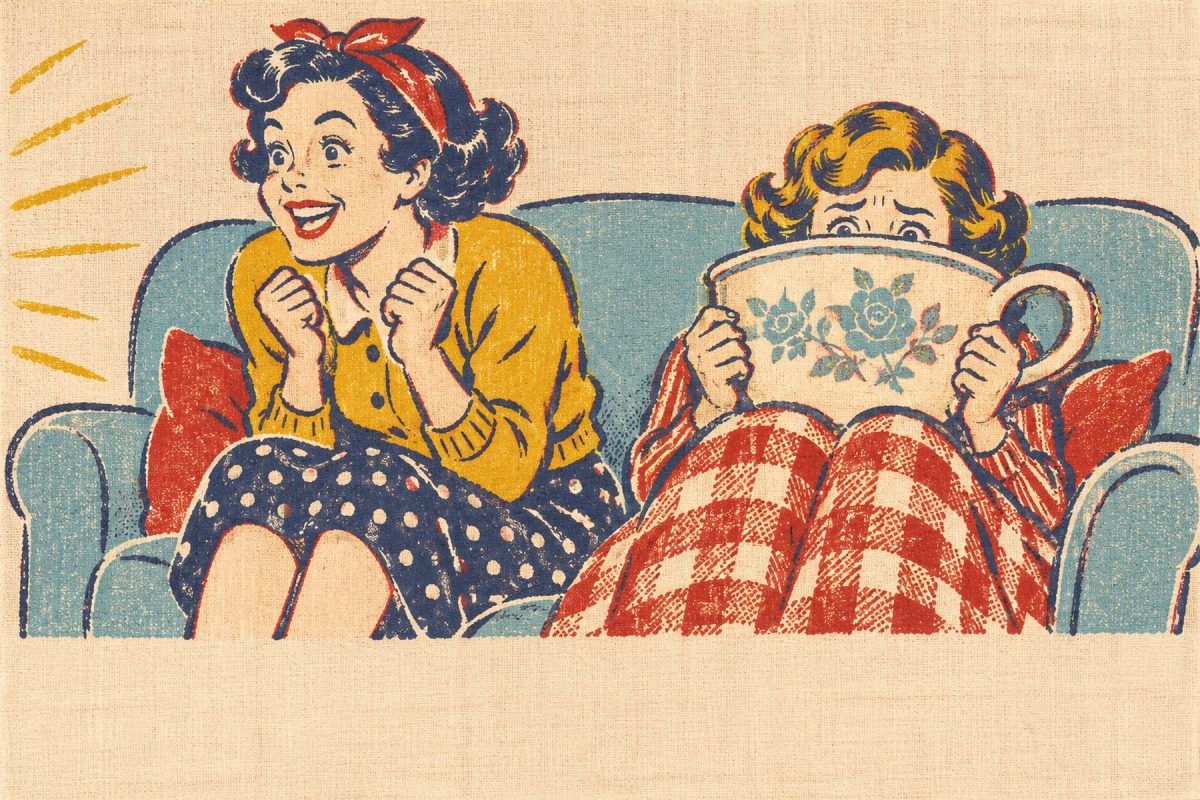
It’s Friday night. Jess has chosen the film: a horror movie with a creepy doll, a dark house and a lot of screaming. She’s on the edge of the sofa, loving every second. Her friend Amy is at the other end of the sofa, under a blanket, hiding behind the biggest mug of tea in the house. “Next time,” says Amy, “I’m choosing. Horror films are not my cup of tea.”
When something is not your cup of tea, you don’t enjoy it. It might be a type of music, a sport, a hobby or a kind of film. The idiom is gentle and polite: you are not saying the thing is bad, only that it isn’t for you.
Where Does It Come From?
Where else? Britain, the land of the cuppa. Tea has been a big part of British life for a very long time, and “my cup of tea” became a friendly way to describe something you really liked. The positive version seems to have come first, back in the early 1900s.
Over time, the negative took over. Today, you’ll hear “not my cup of tea” far more often than “my cup of tea”. It’s the perfect British phrase: polite, a little bit vague, and about tea.
How to Use It
- X isn’t my cup of tea – “Opera isn’t my cup of tea.”
- X isn’t really my cup of tea – really makes it even softer.
- X is just my cup of tea – the less common positive version.
- not everyone’s cup of tea – some people love it, some don’t. “Blue cheese isn’t everyone’s cup of tea.”
- “I went to the football with my dad, but honestly, it’s not my cup of tea.”
- “Heavy metal? Sorry, it’s not my cup of tea.”
- “The new café is lovely, but the music isn’t really my cup of tea.”
- “A quiet weekend with a good book? That’s just my cup of tea.”
Similar British Expressions
- Not my thing – the simplest way to say it.
- Not my scene – often about places, parties or music.
- Each to their own – people like different things, and that’s fine.
- It’s not for me – polite, clear and very common.
More Food Idioms
- A piece of cake – very easy.
- Have a sweet tooth – love eating sweet things.
- Have your cake and eat it – want two good things that can’t both happen.
Want to know more about the British and their tea? Read British culture: tea and learn the slang word cuppa.
Frequently Asked Questions
No, it’s actually a very polite way to say you don’t like something. It sounds soft and personal: the problem is your taste, not the thing itself. That’s why British people love it.
Yes, but it’s less common. You’ll usually hear it with “just” or “really”: “A quiet night in is just my cup of tea.” Most of the time, people use the negative.
You can, gently: “He’s nice, but he’s not really my cup of tea.” It means you don’t click with them, or you’re not attracted to them. It’s softer than saying you don’t like someone.
Test Yourself
Four quick questions. Put the kettle on first.
Quick Check
This is one of our 25 food idioms. See the whole menu.
What is FunkyEnglish?
FunkyEnglish is a website that helps you improve your English. We offer quick lessons that teach idioms, slang, phrasal verbs and more. Visit our homepage to see our latest articles, or use the menu to find specific content!