English Idiom – Butter someone up.
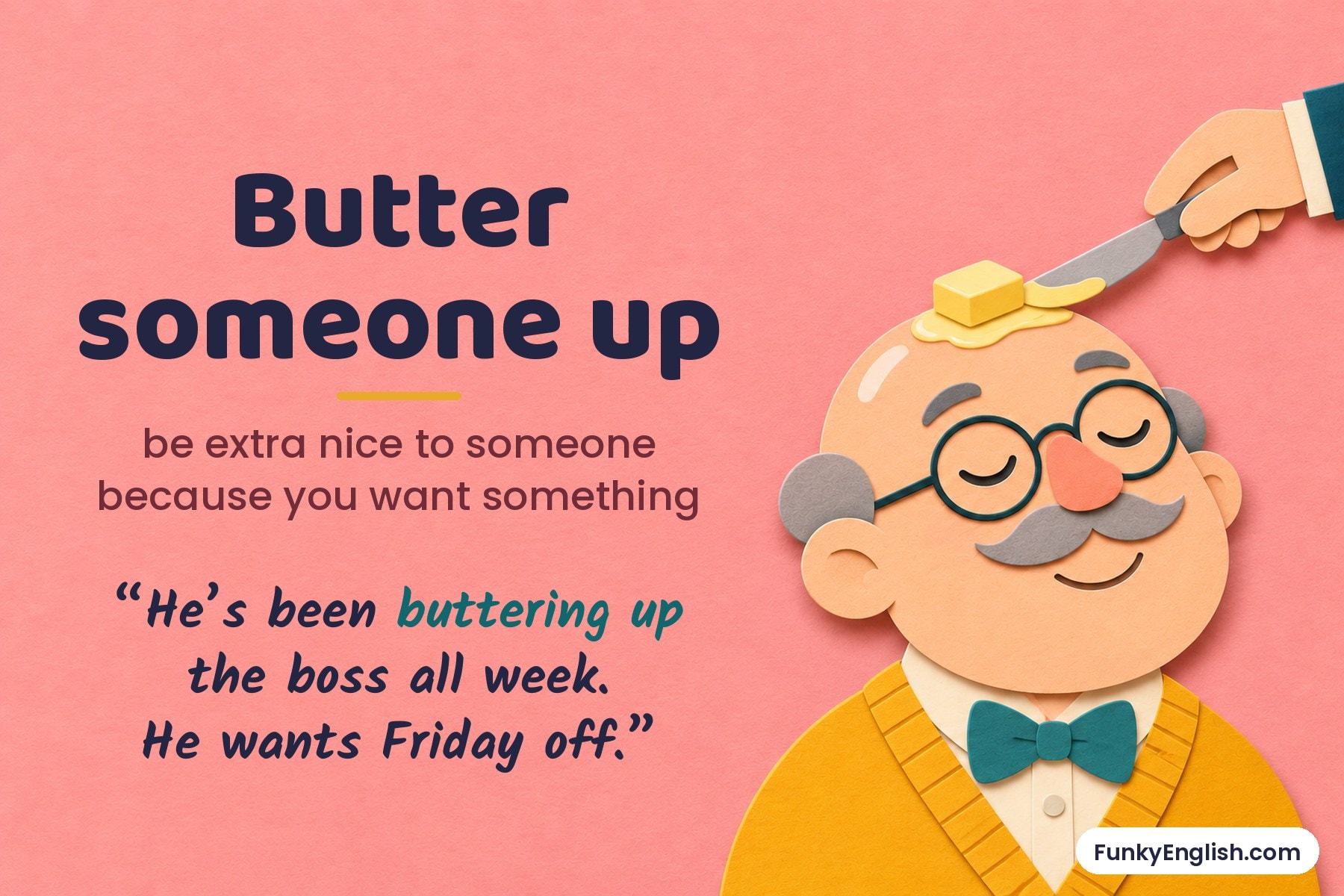
Be extra nice to someone, or say nice things about them, because you want something.
It’s Monday morning. Sam arrives at my classroom ten minutes early. He’s holding a cup of coffee, made exactly how I like it. “Love the new haircut. Very cool. And that was the best lesson I’ve ever had on Friday.” I take the coffee and smile. Then I put it down. “Sam, you’re buttering me up. What do you want?” Sam sighs. “Can I hand my homework in on Wednesday?”

When you butter someone up, you are especially kind, polite or full of compliments, but there’s a reason: you want them to say yes to something. Children butter up their parents. Employees butter up the boss. Students, as you can see, butter up their teachers.
Where Does It Come From?
The picture is simple and very tasty. You spread lovely words on someone, like butter on toast, to make them softer and easier to deal with.
There’s also a popular story about people in ancient India throwing balls of butter at statues of the gods to win their favour. It’s a great image, but there’s no real evidence that the English phrase comes from it, so take it with a pinch of salt.
How to Use It
- butter someone up – “She’s buttering up her mum.”
- butter up someone – also fine: “He’s buttering up the boss.”
- try to butter someone up – “Don’t try to butter me up!”
With a pronoun (me, him, her, them), the pronoun always goes in the middle: butter him up, never butter up him.
- “He’s been buttering up the boss all week. He wants Friday off.”
- “My little brother made me a sandwich. He must be buttering me up for something.”
- “Don’t try to butter me up. The answer is still no.”
- “They buttered up the waiter and got a free dessert.”
Similar British Expressions
- Suck up to someone (informal) – flatter someone, often in an annoying way.
- Sweet-talk someone – persuade someone with nice words.
- Lay it on thick – give far too many compliments.
- Get on someone’s good side – make someone like you.
Butter not working? Some people try to twist your arm instead.
More Food Idioms
- A couch potato – someone who loves the sofa.
- Sell like hot cakes – sell very quickly.
- Full of beans – full of energy.
Frequently Asked Questions
It depends. It’s often light-hearted: a child buttering up their parents before asking for a new phone. But it can also sound a bit sneaky, because the kindness isn’t real. Most people can tell when they’re being buttered up.
Nobody knows for sure. A popular story says people in ancient India threw balls of butter at statues of their gods to ask for favours, but there’s no solid evidence for it. The simplest idea is the best: you spread nice words on someone, like butter on toast, to make them softer.
They mean almost the same. “Suck up to” is more informal and more negative, and it’s often used about people who flatter their boss or teacher all the time. “Butter up” is usually lighter and more playful.
Test Yourself
Four quick questions. And no, flattery won’t get you extra points.
Quick Check
This is one of our 25 food idioms. See the whole menu.
What is FunkyEnglish?
FunkyEnglish is a website that helps you improve your English. We offer quick lessons that teach idioms, slang, phrasal verbs and more. Visit our homepage to see our latest articles, or use the menu to find specific content!